Banister Impulse~Response Model in R Before you start reading this post, please read EXCELLENT paper by Clark and Skiba, especially on the topic of Banister impulse-response model. I decided to write code in R, but also …

Do you know what are biomotor abilities? How did they ‘emerge’? The purpose of this video is to explain to you the ontology of biomotor abilities, the certain flaws of their use (The Root problem, buckets, periodizat…
Stats Playbook: What is Anscombe’s Quartet and why is it important? The following paragraph is take from Wikipedia “Anscombe’s quartet comprises four datasets that have nearly identical simple statistical propert…
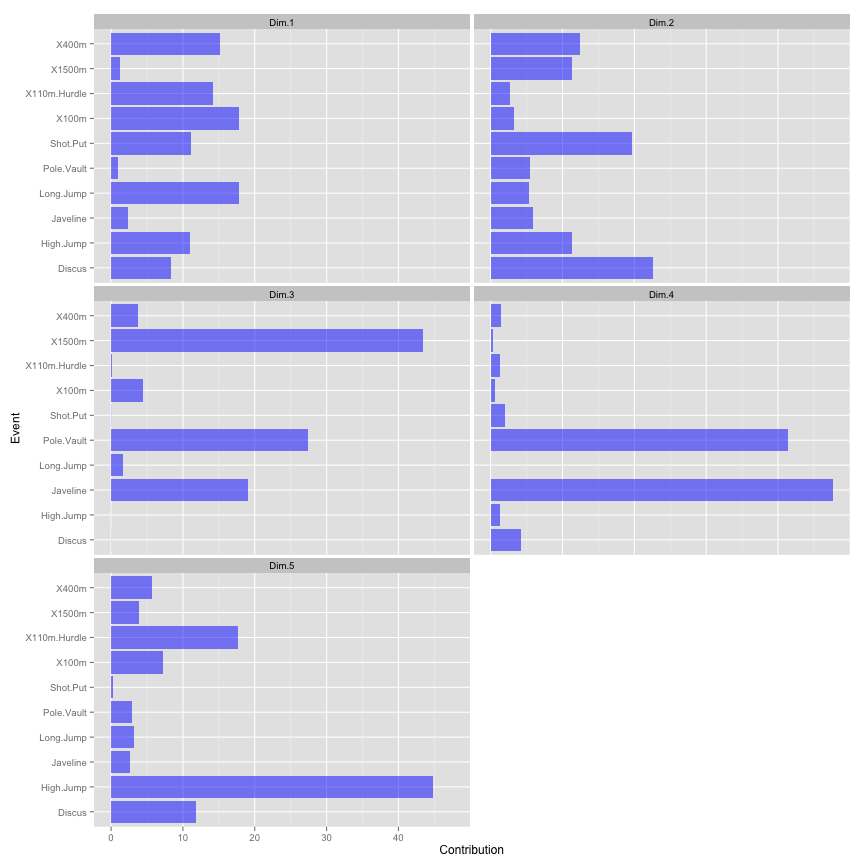
Playbook: Exploring Decathlon Competition Data Click HERE to read part 1 Clustering What we might be interested next is similarities between athletes, or in other words, which athletes have similar profiles. For that p…
Playbook: Exploring Decathlon Competition Data Data set Decathlon data set comes from FactoMineR package and represents two competitions: Decastar and Olympic Games. For this example we will explore only Olympic Games co…
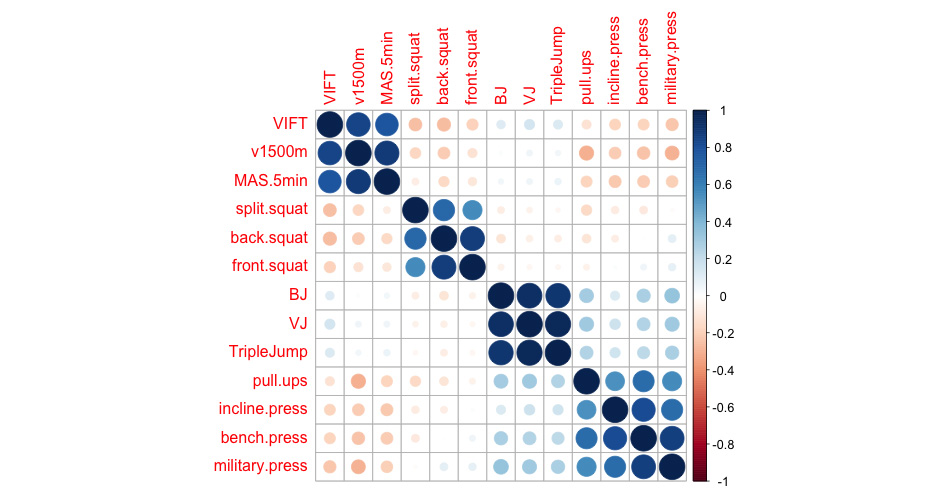
How to Analyze Movement Screen Tests? In the recent post I shared the movement screen we designed and implemented. The question now is how to analyze the data and make real life decisions on it? What do we need to get fr…
How to Analyze Movement Screen Tests? Continuing on the previous post I had an idea to make further analysis. Please note that this is only a playbook. The idea is to transpose the data, and instead of clustering the ath…
How to (Pretend to) Be a Better Coach Using Bad Statistics Here is a simple scenario from practice: Coach A uses YOYOIRL1 test and Coach B uses 30-15IFT (for more info see paper by Martin Buchheit, which also stimulated …
This is the idea I got from the Training and Racing with a Powermeter book by Hunter Allen and Andrew Coggan. It is an excellent and must read book on cycling, but also great book about endurance training in general…
In the last blog post I created a simple simulation of statistical power (probability to identify effects when they are really there) calulation depending on the sample size and effect size (Cohen’s D using Will Hopkin…
Please note:
This action will also remove this member from your connections and send a report to the site admin.
Please allow a few minutes for this process to complete.
Report
You have already reported this .
Share Your Work with Complementary Training
Got something valuable to share — an article, a tool, or an idea that could help others in the coaching world?
We’d love to see it, share it, and make sure your work gets the recognition it deserves.
Fill out the form below and let’s get started.
Cancel Membership
Please note that your subscription and membership will be canceled within 24h once we receive your request.