
Thoughts on Skill Acquisition and Practice

Block vs. Random practice
Suppose you plan working on three skills in today’s workout. It can be anything – from technical skills to tactical/decision making skills. So, for the sake of simplicity let’s call them A, B and C skills.
How are you going to organize the practice for it? Most likely in the following format:

This approach is called “block approach” and it is so ingrained in coaches’ mind that is almost automatic process. But it is not the best.
We usually equate skill performance and skill acquisition and retention. But if someone is performing the skill nicely, does it means he is learning or he will recall the skill after certain period? It is very easy to give you concrete example: What is 3×8?
It is 24, of course. What is I continue to ask you what is 3×8? You will say 24. What if I ask again and again? Still 24. The thing here is that you performed multiplication on the first time and only repeated the result thereafter.
Something similar is happening with block practice. We think if someone is performing well that is also learning well. The opposite also holds true – we think that if someone is stuck at performing that there is no learning.
Another solution is “Random Practice”:

We alternate between skills after each repetition (or after very small number of repetitions). This way the practitioner is practicing “recall” from the memory (from long term to working) which makes the skill to “stick” better. Performance might suffer, but learning will be better. This is crucial to remember.
The question is the following – when should we switch from block to random practice? I would say as soon as possible. One doesn’t need to be very familiar with the skills practiced, but sometimes skills can be introduced in blocked manner, but switched to random practice as soon as possible. Please make note that skills introduced for the first time shouldn’t be complex or with a lot of details – we need to provide “simplified” drills and constraints where practitioners can practice “working skill” with enough confidence and hence be able to do it in random order.
Fixed vs. Variable Practice
Another skill acquisition topic is fixed vs. variable practice. Fixed is referring to “stable” skill parameters: outcome, force, velocity, distance, rhythm, start and stop position and so forth.
Variable position, on the other hand involves varying all these parameter in every execution of the skill. This way, according to Richard Schmidt, one develops schema or something similar to a model describing relationship between internal parameters and external outcome (i.e. level of force and distance and so forth).
The rely on either fixed or variable depends a bit on the nature of the skill and skill performance environment. Some skill are performed in stable (closed) environment with minimal variations in kinematic. Anyway, being able to differentiate between nuances in these situation seems beneficial to me, especially when we realize that even in the most “stable” (close) skills there is some variability. For more variable (open) skills, variable practice is a must.
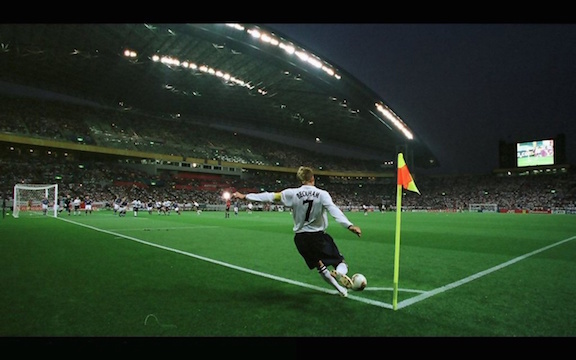
Take set-pieces practices as an example (I will come back to them later as well). Suppose your team is doing corners practice. The coaches usually prescribe fixed and block practice: 5 attacking corners from each side and 5 defending corners from each side. This will almost never happen in a game and it is not the best scenario for learning as well (even if there is some innate variability in every corner). The immediate performance will be better, but the acquisition, retention and transfer to competitive environment will be attenuated.
What can be done instead is to add some more randomness to the practice. If we assume that corners are same skill, hence we are performing block approach; we can at least utilize more variable approach. We can alternate between attack and defense and left and right side after every corner kick. This also has mental/concentration side of things: athletes need to quickly change attack/defending mentality, or in other words to quickly transition between phases. This quick transition is a signature of successful teams.
Another thing that can be done is to “infuse” corner kicks randomly during practice and hence avoid “block” approach altogether. Practicing different strategy (after quick acclimatization via block approach) in every rep is also a must for better skill acquisition.
Fresh vs. Fatigued Practice
This brings me to the last point – should the skill be practiced in rested or fatigued and/or stressful conditions? My opinion about it is that learning a new skill should be done in non-stressful, fresh conditions. That is usually at the beginning of the workout. We introduce new things and allows the athletes to practice is in controlled settings without fatigue or too high stress.
After this initial phase, the conditions need to shift to more competition-like. Taking corner kick as an example again, and assuming that athletes are already familiar with the strategies, coaches usually perform them in everything-but competitive conditions: at the beginning or the end of practice, allows players to “calm down” and get in a “set-pieces state of mind” (by allowing ample recovery/reset time) and provide no before/after scenarios. In my opinion, these needs to be practiced (or should I say perfected) in conditions where athletes are breathing heavily, have big stress on them and where we demand quick mental transition. Hence, we can perform corner kick in between small-sided games or at random during training and demand of players to quickly get to their position and get their concentration/focus right.
Being involved in other sports such as volleyball, I love to make some knowledge transfer between sports. One thing I liked in volleyball is the way coaches create “pressure” in the practices by the use of “wash-out” drills. Wash-outs are pretty simple – one example might involve a team scoring 3 points in the row and scoring 4th point in a specific way or by a specific player to get a point, or else score is being “washed-out”. This creates a pressure, especially on the 4th point.
Something similar is done in possession games in soccer. For example, a given team needs to make 10 passes to get a chance to shoot and score. But sometimes this creates problems at different levels of play organization.
Anyway, some of the “wash-out” ideas can be used when practicing corners, penalties or some other “high scoring chance” drills to create pressure in the squad.
Expanding this topic a bit further, we might also perform other numerous drills that are always being done in “calm” environment, such as core work and stability work, technical drills and so forth. They can serve as great “fillers” between series of practice drills and small sided games, besides they demand from players to perform drills in fatigued state. We are definitely not going to put more oil on the fire and make athlete “tired” just so we can practice under fatigue, but rather we are going to find those situations occurring and put other skills inside that need exposure to such conditions.
Athletes should be more “anti-fragile” and thrive in variability and chaos. We need to help design such conditions and allow that to happen.






Responses