
In-Season Sport Preparation Presentation

You program every set in the weight room. You periodize conditioning down to the minute. Then your athletes go to practice and take on the heaviest physical load of their week, and nobody planned it.
The gym is planned. Practice is not.
Physical development alone does not guarantee sport performance. A 2023 systematic review of 68 NFL Combine studies found that beyond the 40-yard dash (which predicted draft position and salary), none of the physical tests had conclusive predictive value for on-field performance or career longevity. Similar findings showed up in Australian Rules Football: players who played the most games were not the physical specimens.
Physical qualities are a threshold. Once you meet it, big enough, fast enough, strong enough for the level, performance comes from how those qualities show up inside the sport. Technical execution, tactical coordination, psychological readiness under pressure. Three of those four develop primarily when athletes play the sport itself.
But practice carries a physical cost you are not accounting for. That cost follows the same loading principles you manage in the weight room. If performance staff are not helping shape practice structure, the most demanding stressor your athletes face each week goes unmanaged.
What This Presentation Covers
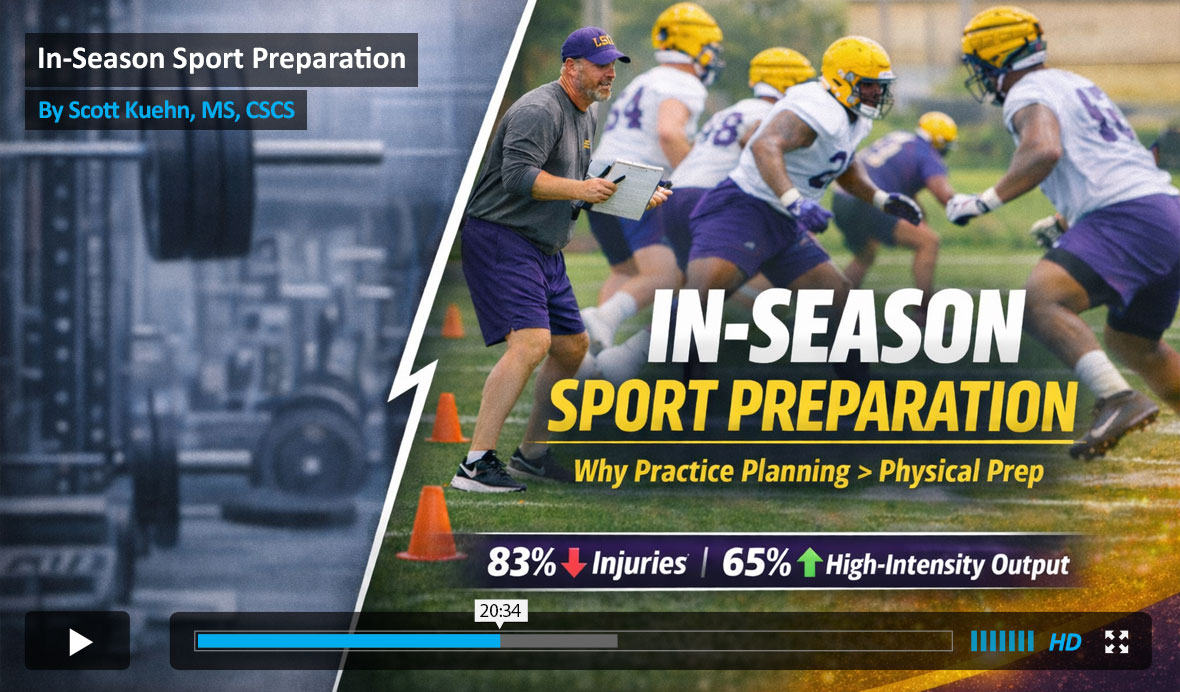
In this 90-minute presentation from the 2024 Move The Needle Symposium, Scott Kuehn walks through how to build sport preparation systems that give you real influence over in-season practice planning.
Scott has built these systems across three programs: William & Mary women’s lacrosse, Arizona football during COVID, and LSU football. Different sports, different coaches, different levels of technology. The principles stayed consistent. The systems adapted.
He covers why sport preparation matters beyond physical development, the principles that guide how you build your system (how to work with coaches, monitor workload with or without GPS, structure loading and recovery blocks, progress week to week), and case studies showing how these played out in practice, including frameworks, schedules, and reporting tools he built for coaches.
What the Results Looked Like
At William & Mary, Scott built a framework around variable competition cycles, categorizing athletes by rolling average playing time and mapping every turnaround cycle from two-day to nine-day windows. The outcomes: significant improvements in goals per game and shooting percentage, an 83% reduction in in-season injury incidence, and a 98% reduction in insurance claim costs.
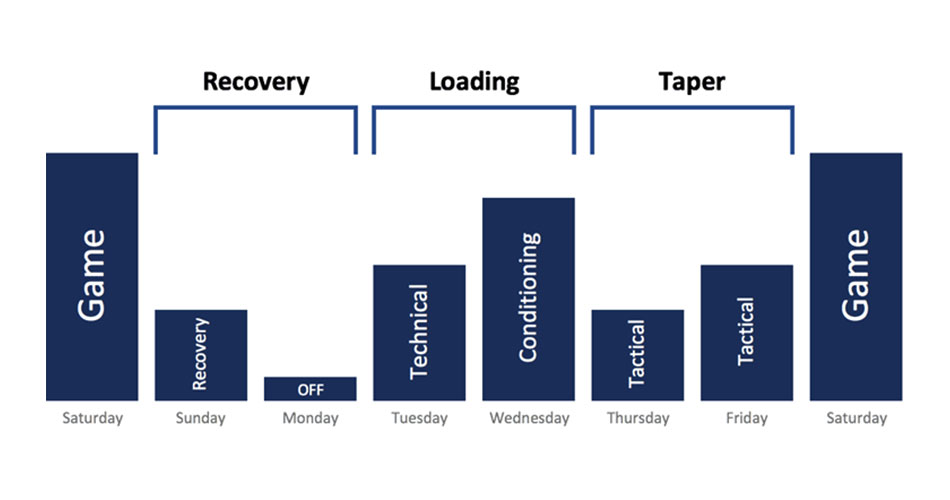
At Arizona, working within a COVID-shortened season, he built a stoplight system with themed practice days: speed days (shorter, higher intensity), capacity days (above game demands, no-huddle pace), and recovery days. Starting at 60 minutes per day in week one and progressing from there, the team saw a 65% increase in high-speed distance and a 64% increase in explosive distance compared to the previous fall camp.
At LSU, Scott developed a budget-based system using a four-week rolling average of weekly practice load. Coaches get a weekly workload budget and spending ranges for each day. They keep autonomy over distribution. The system adjusts when players change roles, get injured, or shift position.
Why This Approach Works with Coaches
Scott operates from a principle he calls “make them right”: achieve the physical outcomes you need without asking the coach to overhaul their practice.
If a coach practices 90 minutes every day across five days, that is 450 minutes. Move 30 minutes from one day to another, and you get the same total output with better physical outcomes. The coach does not lose a single drill. You are just distributing the load differently.
If you know your athletes average 8 to 10 player load per rep, pulling 5 to 6 reps from two segments drops workload by 10%. No sweeping changes.
And when a head coach wants the hardest practice of the season the morning after a bad loss, the framework gives you something to point to. Not your opinion against theirs, but a system you both agreed to before the loss happened.
Who This Is For
Any S&C coach, sports scientist, or performance staff member who wants to expand their influence beyond the weight room. You do not need GPS or expensive monitoring tools. Scott built his first system using session RPE and a Google Sheet.
If you want real influence over what happens in practice, start here.
Access Information
Non-members: This video presentation is available for individual purchase. Buy it below and get instant access.
CT Members: This presentation is already included in your membership. Log in to watch it now.
The video is embedded below this article and accessible after login or purchase.




Soy fisioterapeuta deportivo de Venezuela estoy interesado busca programa de recuperación