
Recovery Methods in Football: An Evidence-Based Practical Guide for Coaches Part 2

Part 1 covered the foundations of recovery and the main thermal, active, manual, and passive modalities. Part 2 turns to monitoring and applied contexts before bringing the evidence together in a practical decision framework.
PART 5 — MIND, BREATH, AND MONITORING
15. Breathing Techniques
Definition. Structured breathing protocols (diaphragmatic breathing, paced/slow breathing) aimed at downregulating sympathetic nervous system activity.
Mechanism. Slow, controlled breathing increases vagal tone and heart-rate variability, promoting a parasympathetic shift that may support subjective recovery and sleep onset.
Evidence. Evidence in team-sport athletes remains limited and mostly indirect, drawn from broader sleep-intervention reviews that include breathing/relaxation techniques as minor components of multi-strategy protocols rather than standalone interventions with dedicated football-specific trials (Vitale et al., 2023).
Benefits. No cost, no equipment, easily taught, supports pre-sleep relaxation and pre-match anxiety management.
Limitations. Weak standalone evidence base specific to football recovery; benefits are plausible but not yet rigorously quantified in this population.
When to use it. Pre-sleep routines, post-match downregulation, and as a complementary tool within broader psychological preparation.
When NOT to use it. As a stated primary recovery strategy in a periodized plan — treat it as a low-cost complement, not a pillar.
Practical application. 5–10 minutes of paced breathing (e.g., 4-second inhale, 6-second exhale) before sleep or after high-stress matches.
Competitive calendar. Useful year-round, especially valuable during high-pressure fixtures (derbies, relegation/promotion run-ins) where psychological stress compounds physical fatigue.
Evidence level: Low.
16. Mindfulness
Definition. Present-moment attention practices aimed at reducing psychological stress and improving self-regulation.
Mechanism. Proposed to reduce cortisol reactivity and rumination, indirectly supporting sleep quality and perceived recovery.
Evidence. A systematic review of sleep interventions in athletes found mindfulness demonstrated promising, though not yet conclusive, results for improving sleep quality, ranking behind sleep extension and napping in overall effectiveness (Vitale et al., 2023).
Benefits. Supports mental health and stress management, indirect support for sleep quality, no physical risk.
Limitations. Requires consistent practice to show effect; football-specific, adequately powered RCTs remain scarce; effects are indirect (via sleep/stress) rather than directly on muscular recovery markers.
When to use it. As part of a season-long psychological skills program, particularly for youth players transitioning to senior environments and players managing high-pressure competitive periods.
When NOT to use it. As a quick pre-match fix expected to produce immediate physical recovery benefits — it is a cumulative, longer-term tool.
Practical application. 10-minute guided sessions 2–3x/week, integrated into the weekly schedule rather than left to individual initiative alone.
Competitive calendar. Maintain consistently across the season; particularly valuable during high fixture-congestion periods where cumulative psychological stress compounds physical fatigue.
Evidence level: Low–Moderate.
17. Monitoring Fatigue
Definition. Systematic tracking of subjective and objective markers to detect accumulated fatigue before it manifests as illness, injury, or underperformance.
Mechanism. Fatigue is multifactorial (neuromuscular, metabolic, psychological); no single marker captures it fully, which is why consensus recommends a multi-marker approach.
Evidence. The IJSPP consensus statement on recovery and performance explicitly recommends combining self-report measures with selected objective markers rather than relying on any single tool (Kellmann et al., 2018). A systematic review of single-item self-report wellbeing measures found them meaningfully related to training load changes in team-sport athletes, supporting their practical utility despite their simplicity (Duignan et al., 2020).
Benefits. Early identification of maladaptive fatigue, individualized load adjustment, improved communication between medical, physical, and coaching staff.
Limitations. Self-report measures are vulnerable to social-desirability bias (players may under-report fatigue to secure playing time); no marker reliably predicts injury on its own.
When to use it. Daily, as a low-burden habit (single-item wellness questionnaires) combined with periodic objective testing (jump height, sprint times).
When NOT to over-rely on a single tool. Avoid making team-selection or training decisions based purely on one metric (e.g., HRV alone) without triangulating with subjective and performance data.
Practical application. Daily 1–5 Likert-scale ratings for sleep quality, muscle soreness, stress, and mood; weekly countermovement jump testing; post-match RPE x duration for internal load.
Competitive calendar. Increase monitoring frequency and staff attention during congested fixture periods and after international duty; maintain baseline monitoring year-round to detect individual deviations.
Evidence level: Moderate.
18. Recovery Monitoring Tools (HRV, Wearables)
Definition. Technological devices (HRV apps, wearables, GPS-derived metrics) used to quantify physiological readiness and training load.
Mechanism. Heart rate variability reflects autonomic nervous system balance; reduced RMSSD or altered ratios may indicate accumulated fatigue, although interpretation is highly individual.
Evidence. A systematic review and meta-analysis confirmed HRV-derived autonomic markers are meaningfully associated with training status, but recommended they never be used in isolation, always alongside psychometric wellness data (Bellenger et al., 2016; extended by more recent narrative reviews on mobile HRV monitoring). Resting HRV appears largely unaffected in some overreaching studies, undermining claims that it alone reliably predicts overtraining.
Benefits. Objective, scalable data collection; can detect individual trends invisible to subjective report alone; useful for longitudinal player profiling.
Limitations. High day-to-day noise/variability; requires consistent measurement conditions (time of day, posture, device); psychosocial stressors (travel, personal life) can confound readings independent of training load.
When to use it. As a complementary layer within a broader monitoring system, tracked longitudinally per individual rather than compared across players.
When NOT to use it. As a stand-alone decision-making tool for training or selection; HRV alone should never override coaching judgment plus subjective wellness data.
Practical application. Morning HRV readings via validated smartphone/chest-strap apps under standardized conditions, reviewed weekly for trends rather than daily absolute values.
Competitive calendar. Most valuable during pre-season load-building phases and congested fixture periods, where early detection of maladaptation has the greatest practical payoff.
Evidence level: Moderate (as part of a multi-marker system); Low (as a standalone predictive tool).
PART 6 — APPLIED CONTEXTS
19. Travel Recovery Strategies
Definition. Structured protocols to manage travel fatigue and jet lag around domestic and international fixtures.
Mechanism. Long-haul travel disrupts circadian alignment (jet lag) and independently causes travel fatigue (dehydration, immobility, disrupted sleep) regardless of time-zone crossing.
Evidence. The 2021 international consensus statement on travel fatigue and jet lag in athletes distinguishes clearly between the two phenomena and provides pre-flight, in-flight, and post-flight “toolboxes,” while acknowledging that the overall evidence base for specific interventions remains limited (Janse van Rensburg et al., 2021). Strategic light exposure/avoidance and pre-adjusted sleep schedules are the best-supported circadian interventions; exercise is a plausible but less-established jet lag countermeasure.
Benefits. Reduced subjective travel fatigue, faster circadian realignment, better sleep quality in the days following long-haul travel.
Limitations. Evidence quality is limited by the difficulty of controlled research in real competitive travel settings; individual chronotype variability limits standardized protocols.
When to use it. Before and during any transmeridian travel exceeding 2–3 time zones, and for long-haul domestic trips exceeding 3–4 hours of transit.
When NOT to over-manage it. For short domestic trips within 1 time zone, elaborate jet lag protocols are unnecessary; focus resources on simple fatigue management (hydration, movement, sleep).
Practical application. Gradual pre-flight sleep-schedule shifting toward destination time, strategic light exposure/avoidance, in-flight hydration and compression garment use, and protected sleep opportunities immediately on arrival.
Competitive calendar. Apply intensively before international breaks and continental competition travel; less critical for single-country domestic league travel within the same time zone.
Evidence level: Moderate (consensus-based); Low (for specific isolated interventions).
20. Congested Fixture Recovery
Definition. Integrated recovery planning across periods of ≥2 matches per week.
Mechanism. Congested schedules compress the time available for glycogen restoration, tissue repair, and neuromuscular recovery, cumulatively raising injury risk with each added match played on short rest.
Evidence. UEFA and international match-calendar data show that injury rates rise meaningfully in matches played with fewer than 3 days’ recovery compared with more than 6 days, a pattern reported consistently across systematic reviews of fixture congestion in professional soccer (Julian, Page, & Harper, 2021). A 2025 expert position statement on the international match calendar reached formal consensus that players require a minimum of two days between appearances and at least one mandatory rest day per week (Den Hollander et al., 2025). A large FIFPRO player survey found more than half of respondents believed they had sustained an injury directly attributable to fixture overload (Pillay et al., 2022).
Benefits (of structured management). Reduced injury incidence, more consistent performance output across a congested block, better squad-wide load distribution.
Limitations. Coaches at lower-resource clubs often cannot rotate a full squad; recovery windows are frequently dictated by fixture schedulers rather than sports-science staff.
When to prioritize it. Any period with ≤4 days between matches — this is the threshold at which recovery strategy selection meaningfully changes team performance and injury risk.
When NOT to apply blanket protocols. Individualize by actual minutes played — a substitute who played 10 minutes does not need the same recovery investment as a player who completed 90.
Practical application. Squad rotation based on cumulative minutes, prioritized access to massage/CWI/sleep interventions for starters, reduced high-intensity training volume between matches, and MD+1 active recovery instead of intense technical-tactical work.
Competitive calendar. This is, by definition, the context requiring the highest concentration of recovery resources — sleep, nutrition, CWI, and compression should all be applied with maximum consistency during these windows.
Evidence level: High (for the injury-risk relationship); Moderate (for specific mitigation protocols).
21. Recovery for Youth Players
Definition. Age-appropriate adaptation of recovery principles for developing players, accounting for growth, maturation, and dual athletic/academic or family demands.
Mechanism. Adolescents recover differently from adults: growth-related tissue vulnerability (particularly around peak height velocity), still-developing sleep architecture, and typically less-controlled nutrition than professional first-team environments.
Evidence. Youth-specific reviews highlight that sleep debt in adolescent athletes is frequently driven as much by academic schedules and screen use as by training load itself, a pattern distinct from the drivers of sleep debt typically reported in adult elite populations (Walsh et al., 2021). The expert position statement on the international match calendar dedicated a specific consensus dimension to young-player workload safeguards, reflecting explicit recognition that adult congested-calendar norms are not appropriate for developing players (Den Hollander et al., 2025).
Benefits (of age-appropriate recovery). Reduced overuse injury risk during growth spurts, protected sleep supporting both athletic development and academic performance, healthier long-term relationship with training load.
Limitations. Coaches often apply adult recovery protocols unmodified to youth squads; family/school schedules limit control over sleep and nutrition compared with professional environments.
When to prioritize it. Continuously through adolescence, with heightened attention during documented growth spurts and exam/school-stress periods that compound training fatigue.
When NOT to apply adult protocols directly. Avoid replicating first-team congested-fixture recovery intensity (e.g., frequent CWI, heavy supplementation) in youth players without individualized justification — the priority in this population is education and habit-formation, not device-based recovery.
Practical application. Sleep education for players and parents, school-schedule-aware training timing, simple nutrition education (whole-food based rather than supplement-based), and conservative match/training load monitoring around growth spurts.
Competitive calendar. Apply extra caution during representative-team call-ups that stack on top of club fixtures — this is where youth players most often experience genuine fixture congestion without adult-level recovery infrastructure.
Evidence level: Moderate (for general principles); Low (for youth-specific device/modality research, which remains scarce).
PART 7 — BUILDING A COACH’S DECISION FRAMEWORK
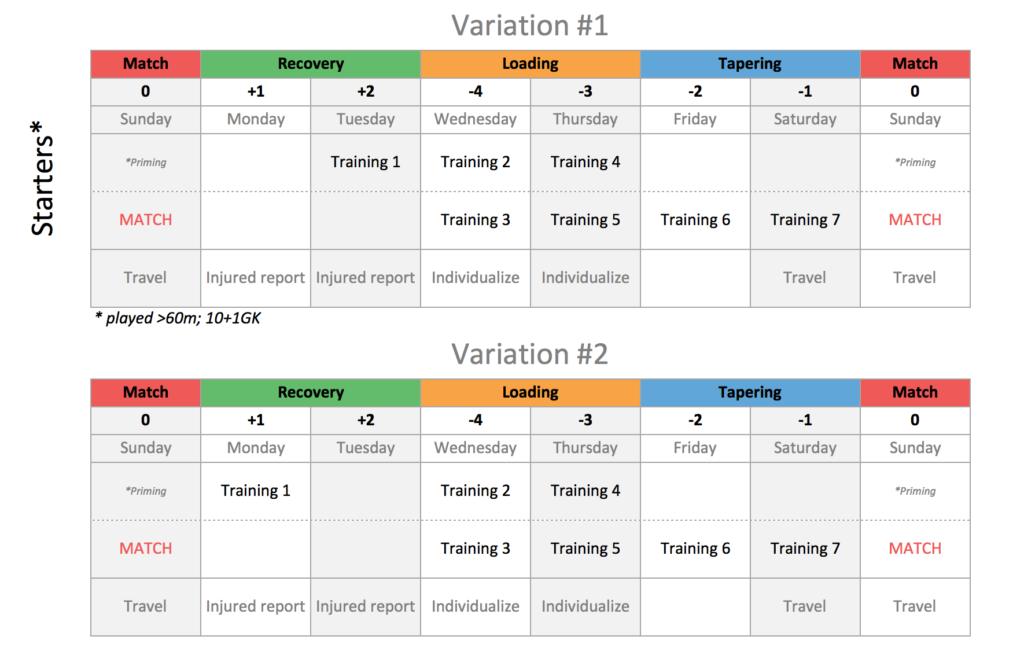
Having reviewed 21 methods individually, the practical question for a coach or physical preparation staff is: what do I actually do on a Tuesday after a Sunday match, three days before the next one?










Responses