
Strength Training Manual: Planning – Part 5

1. Introduction
2. Agile Periodization and Philosophy of Training
3. Exercises – Part 1 | Part 2
4. Prescription – Part 1 | Part 2 | Part 3
5. Planning – Part 1 | Part 2 | Part 3 | Part 4 | Part 5 | Part 6
I am very happy to announce that I am finishing the Strength Training Manual. I decided to publish chapters here on Complementary Training as blog posts for two reasons. First, I want to give members early access to the material. And second, this way I can gain feedback and correct it if needed before publishing it.
I look forward to hearing your thoughts.
Enjoy reading!
Mladen’s Methodological System of Classifying Set and Rep Schemes
As outlined in Figure 5.33, additional approach to classify set and rep scheme that will be explained in this section is “methodological” approach. The set and rep methods that follow can be applied to different rep ranges, qualities, toughness and volume variants. These will be combined with the aforementioned vertical planning progression to generate really extensive bucket of set and rep schemes that can be found in the Appendix.
Table 5.35 contains a list of 12 different set and reps schemes methods. For the sake of simplicity, each utilized 4×10 (except Cluster and Cluster Wave methods) and Constant vertical planning progression.
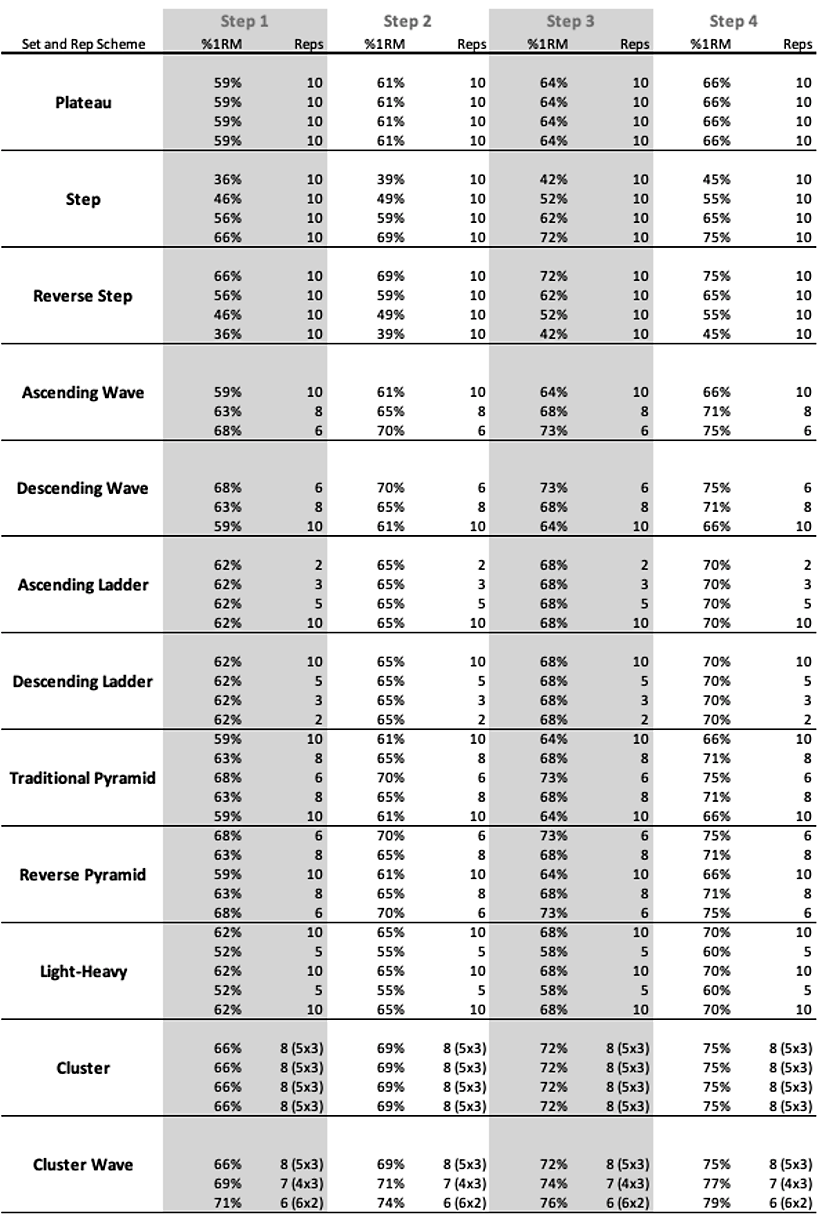
Table 5.35. Mladen’s Methodological System of classifying Set and Rep schemes.
Plateau method
Plateau method is your bread-and-butter set and rep scheme. It revolves around the same weight and reps across multiple sets. Famous 5×5 program utilizes a plateau method, as well as ‘volume’ or ‘medium’ workout days in the intermediate Starting Strength programs (Rippetoe & Kilgore, 2011; Rippetoe, Baker & Bradford, 2013):
Wednesday: Squats 3×5 @65% (sets across or Plateau method) (Easy)
Friday: Squats 1×5 @85% (ramp up set of 5)
Plateau method is very useful in phases and workouts where the volume is more important (or emphasized). It can become boring, since there is no variety, just same sets across. It could be very useful in the after-sets as a back-off approach:
Back-off sets 90% of 3RM for 5 sets of 3
Example: ramped up to 100kg for 3 reps, followed by 5×3 with 90kg
Plateau can also be used with assistance exercises. All in all, it is a very versatile method. Table 5.36 contains example of 4×10, 4×8, 4×6 and 5×5 Plateau set and rep schemes using Constant vertical planning progression. Please note that the name of set and rep schemes follows “Vertical Planning Progression + Scheme + Set/Rep” formula. Plateau methods most often use the extensive columns in the Perc Drop and RIR Inc tables to estimate %1RMs progressions. Appendix contains a full list of set and rep schemes.
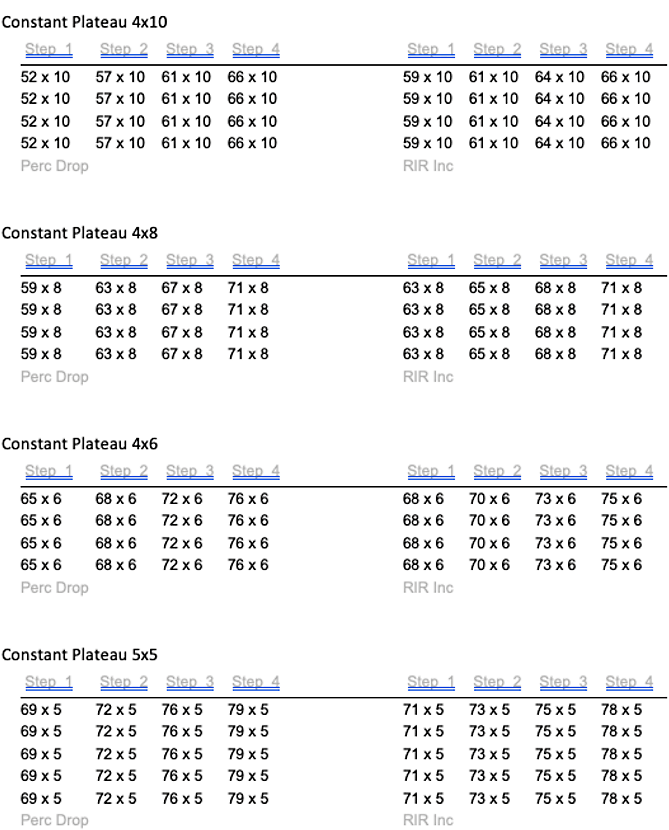
Table 5.36. Example of 4×10, 4×8, 4×6 and 5×5 Plateau set and rep schemes using Constant vertical planning progression.
Step method
Step method, or ramp-up, revolves around keeping the reps stable, but progressing %1RM. This progression is often done in 5-10% increments:
75% x 5
85% x 5 (top set or a special set)
Programs such as 5/3/1 utilize Step method for the main exercises (Wendler & Koss, 2013; Wendler, 2017). Step method is excellent for ballistic movements, since it slowly increases the weight (Baker, 1995). This tends to be followed with one or more back-off sets to utilize the PAP effect of the top set, or to increase volume/dose:
Step method also involves ramping up to a nRM (repetition maxes), e.g., 5RM, 3RM, or 1RM (daily max) and basing back-off sets using those RMs (e.g. using 80-90% of daily RM). Tables presented in this manual can be a useful guiding tool to get a rough estimate of those RMs. Here is an example:
60kg x 3
70kg x 3
80kg x 3
90kg x 3
95kg x 3
100kg x 3 (3RM for today)
80kg x 5 reps x 5 sets (back off using Plateau method)
Daily nRM is a very useful method if one doesn’t want to use percent based approach, nor 1RM testing. Adding RIR also works (I suggest using percent based tables to give you a guide for easier finding of the weight even if you do not use them):
Vertical planning implemented with daily RM approach might involve reducing RIR over time, decreasing reps, increasing sets, or using the back-off sets to progress. Here is one example:
Week 2: Deadlift ramp up to 3 w/2RIR (do 3×3 with 90% as a back-off)
Week 3: Deadlift ramp up to 1 w/0RIR (do 3×1 with 90% as a back-off)
And another example where one progresses back-off sets using Sets Accumulation method:
Week 2: Deadlift ramp up to 5 w/2RIR (do 5×5 with 90% as a back-off)
Week 3: Deadlift ramp up to 5 w/2RIR (do 7×5 with 90% as a back-off)
Variation of the step method might involve zig-zag pattern, e.g. three steps up, one step down:
In this manual, I’ve used intensive columns in the Perc Drop and RIR Inc tables to estimate %1RMs progressions for the Step method. If you plan using smaller jumps (e.g., 5%), then make sure to use either normal or extensive columns, since these ramp up sets also count as work. Table 5.37 contains examples of 4×10, 4×8, 4×7 and 4×6 Step set and rep schemes using Linear vertical planning progression.
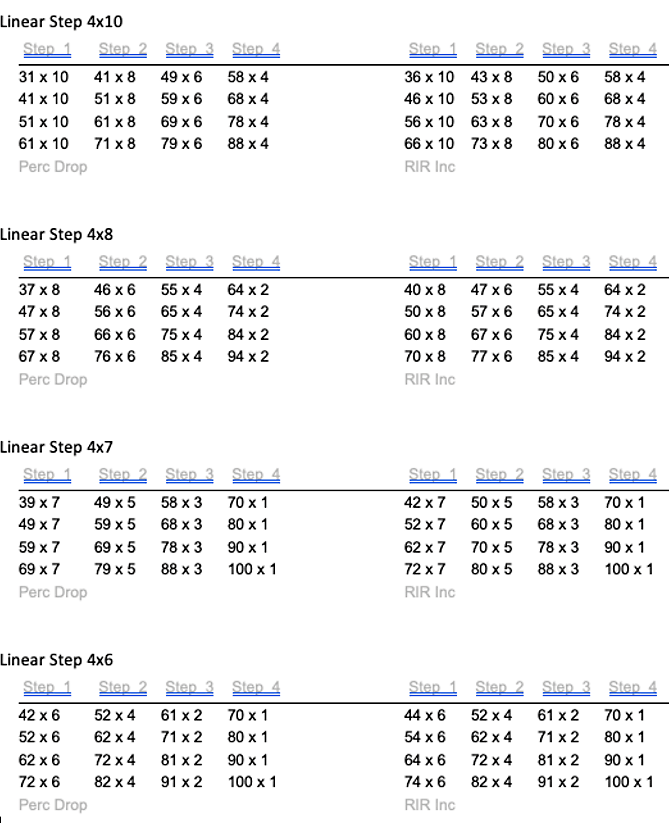
Table 5.37. Example of 4×10, 4×8, 4×7 and 4×6 Step set and rep schemes using Linear vertical planning progression.
Reverse Step method
Reverse step method revolves around decreasing %1RM, while keeping the number of reps stable. Reverse step can be useful with hypertrophy or muscle endurance set and rep schemes, or anywhere else where the fatigue is expected and needs to be adjusted for in the following sets (also see Descending Ladder method). Here is an example of the hypertrophy workout using leg press machine and Reverse Step method.
Warm-Up: 50% x 5, 60% x 5, 70% x 3, 80% x 2 (over warm up)
Main Sets: 70% x 12, 65% x 12, 60% x 12, 55% x 12, 50% x 12
After sets: 40% Isometrics (30sec holds)
Table 5.38 contains examples of 4×12, 4×10, 4×8, and 4×7 Reverse Step set and rep schemes using Reverse Linear vertical planning progression. I’ve used intensive columns in the Perc Drop and RIR Inc tables to estimate %1RMs progressions for the Reverse Step method.
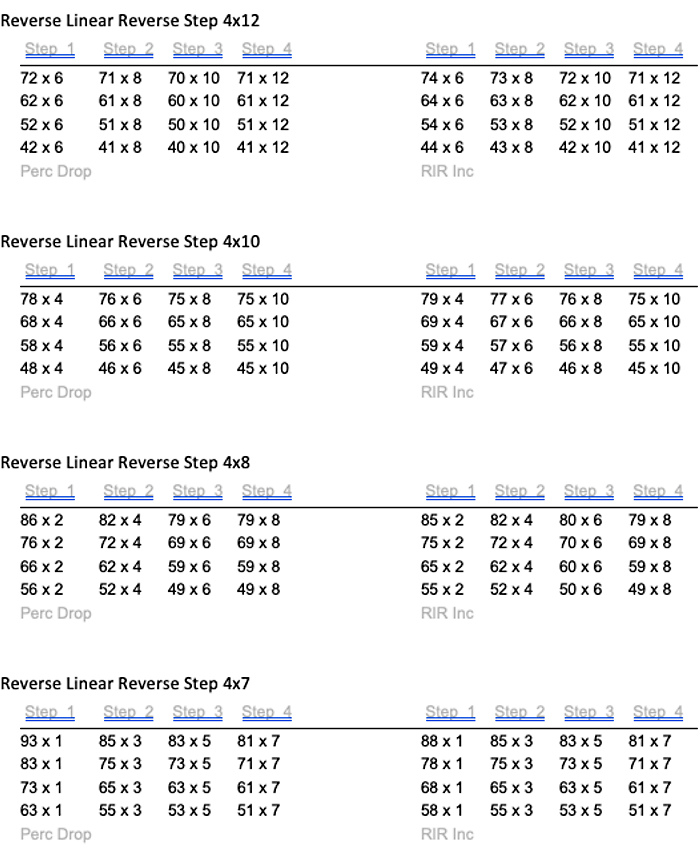
Table 5.38. Example of 4×12, 4×10, 4×8, and 4×7 Reverse Step set and rep schemes using Reverse Linear vertical planning progression.
Ascending Wave method
Wave method involves varying number of reps across the sets (usually in triplets e.g., 6/4/2, 5/3/1, 3/2/1), repeated multiple times (in waves, e.g., 3/2/1/3/2/1, or 2×3/2/1). I personally really love the Wave method. Let’s assume we need to perform 6×6 using the Plateau method, versus 2×8/6/4 using the Wave method (Table 5.39) in the back squat exercise.
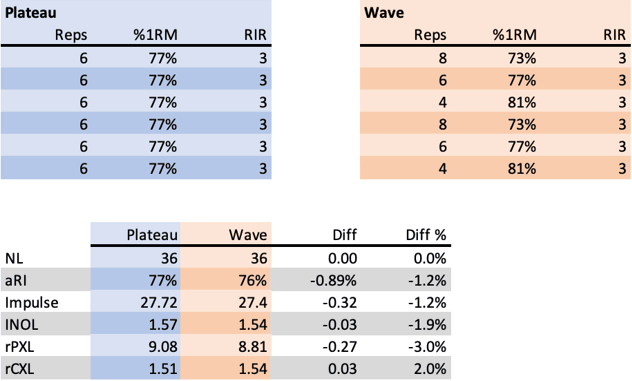
Table 5.39. Plateau versus Wave – not much of a difference in the summary dose metrics. Can be a mental difference though.
If you check the summary dose metrics in Table 5.39, you will notice that they are not very different (similar story to the one told on Figure 5.36, but applied to a single workout, rather than weeks). But let me tell you – 6×6 would kill me mentally. No change in reps. No plate changes on the barbell. Just squat and rest. My dislike ratings would go through the roof. On the flip side, if I ‘trick’ myself with the Wave method, I would probably enjoy it. I would perform similar (if not the same) workload/dose, without mental burden.
Waves make everything more fun (pun intended). Hypertrophy work (2×12/10/8), maximal strength (2×5/3/1), ballistic movements ( 3×3/2/1), assistance (15/10/5) or what have you. Everything is more fun with Waves.
Wave method in this manual assumes triplets are done at the same RIR (e.g., 5 w/3RIR, 3 w/3RIR, 1 w/3RIR) at the extensive variant of the vertical planning progression. Only one wave is exemplified in the table since there might be different variations. Let’s explain a few.
First, waves most commonly come in triplets (e.g., 3/2/1), but can come as twins (e.g., 5/3/5/3), quadruplets (e.g., 8/6/4/2/8/6/4/2). With the quadruplet, undulating distribution is possible rather than the default linear (e.g., 8/4/6/2 versus 8/6/4/2). Just sparking your imagination here.
Second, the most common rep decrement is 2, but different variants are possible (e.g., 15/10/5, 12/8/4, 9/6/3, 3/2/1).
Third, RIR can be different within triplets. This might be needed to avoid fatigue from higher reps. Table 5.40 contains few options for modifying the higher rep components of triplets.

Table 5.40. Modifications of the default Wave method using the last (or top) set as criteria
Let’s assume 4 reps @81% (approximately 3 RIR) is the top set in the triplet1. Previous two sets involve increment in reps by 2 (i.e., 6 and 8 reps), and the %1RM for them is estimated using Perc Drop or RIR Inc methods of vertical planning progression for that particular rep range at the same progression level. For the sake of simplicity, Table 5.40 assumed same RIR for all three.
RIR decrement modification method involves increasing RIR for first two sets using increment of 1-2 RIR. This might take much more calculus (or probably Excel) to do it. This is similar with RIR multiplication modification method. With RIR multiplication, top set RIR is multiplied by 2, 3, or 4, depending how many sets there are in the wave.
Perc minus involves deducting -5%, -10%, -15% from the assigned rep %1RM. This is much simpler to do, particularly with the Wave set and rep schemes provided in this manual.
The easiest method, Very Simple method, involves only the use of the top set. The other two sets are estimated using top set %1RM, but deducting 5-10% off of it, depending on the rep increment (e.g., for 1 rep that would be around 5-10%, for 2 reps that would be 10-15%, and for 3 reps that would be 15-20%). This method represents a very simple rule of thumb.
Fourth, triplets come in waves. Although the most common is a single wave, one can perform more waves. Table 5.41 contains few modifications for the upcoming waves.

Table 5.41. Modifications of the default Wave method, when there are more than one waves performed
The %1RM of the upcoming waves is either decreased (to adjust for the fatigue and more extensive training dose), or increased (to ramp up, or to use the facilitation of the previous wave, according to some authors). Decrement can be used when higher reps are performed with the hypertrophy aim (e.g., 12/10/8), while increment can be used with lower number of reps in the max strength or ballistic schemes (e.g., 3/2/1). These two adjustments can be performed using adjusted RIR and finding the %1RM, or by using simple +/- 2.5%-5% change in %1RM in the upcoming waves.
Table 5.42 contains examples of 12/10/8, 10/8/6, 8/6/4, and 7/5/3 Ascending Wave set and rep schemes using Block method of vertical planning progression. I’ve used extensive columns in the Perc Drop and RIR Inc tables to estimate %1RMs progressions for the Ascending Wave method.
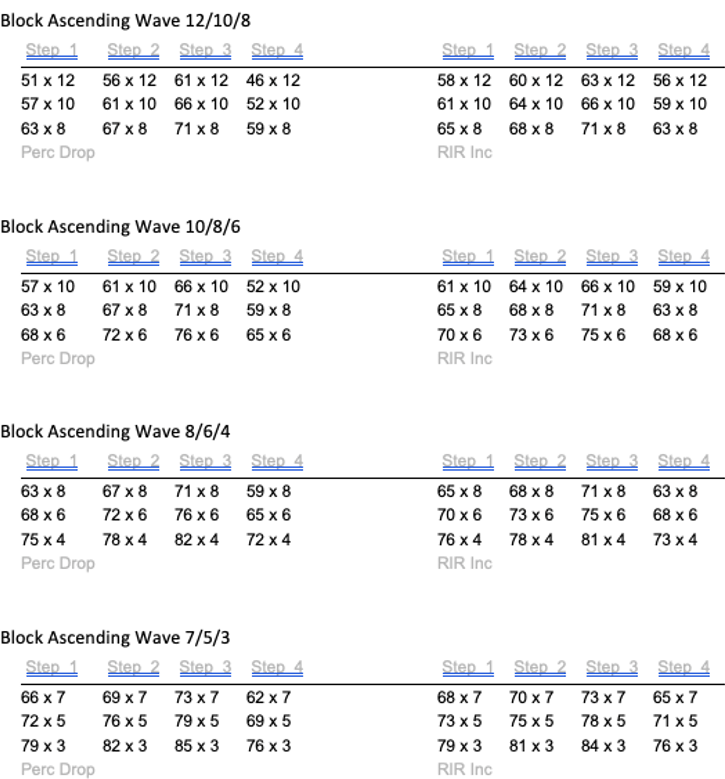
Table 5.42. Example of 12/10/8, 10/8/6, 8/6/4, and 7/5/3 Ascending Wave set and rep schemes using Block method of vertical planning progression.
Descending Wave method
Descending Waves is a variant of the Wave method. In Descending Wave method, reps increase in the wave (e.g. 8/10/12). All the variations explained in the Ascending Wave method holds true, although one can decide whether to adjust the first (top set in this case) or the last set. Table 5.43 contains variants of adjusting both.
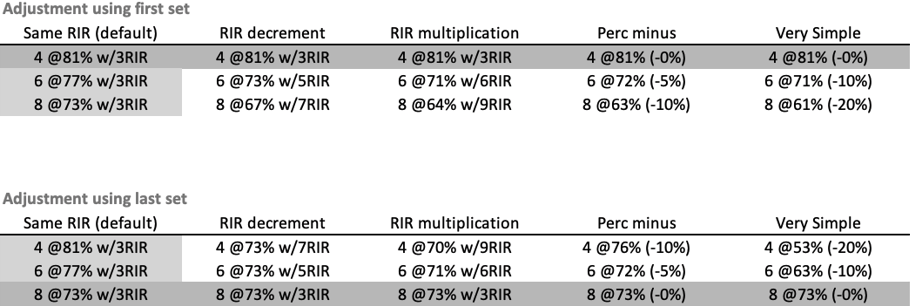
Table 5.43. Modifications of the Descending Wave method. Adjusting the last set pretty much creates a Ladder method, since prescribed %1RM are very similar.
As can be seen from Table 5.43, adjusting the first set is equal to adjusting the top set in the Ascending Wave. Adjusting the last set creates few problems, and waves start to look very similar to the Ladder method, which will be explained shortly. This effect happens every time there is an increase in reps as well as decrease in RIR across a progression step (see Reverse Linear and Reverse Undulating vertical planning methods on Figure 5.39 for a similar effect and compare them to Linear and Undulating methods). I am not saying that these should not be utilized, but they are becoming very similar to the Ladders (with the exception of the Very Simple method that looks like a very weird warm-up or a variant of the Light-Heavy method).
Table 5.44 contains examples of 8/10/12, 6/8/10, 4/6/8 and 3/5/7 Descending Wave set and rep schemes using Block Variant method of vertical planning progression. I’ve used extensive columns in the Perc Drop and RIR Inc tables to estimate %1RMs progressions for the Descending Wave method.
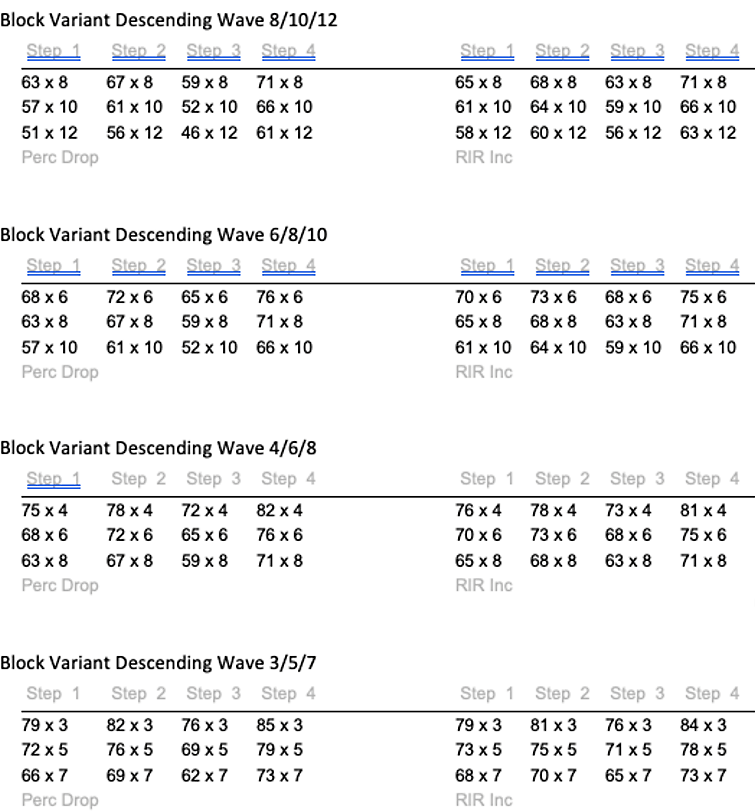
Table 5.44. Examples of 8/10/12, 6/8/10, 4/6/8 and 3/5/7 Descending Wave set and rep schemes using Block Variant method of vertical planning progression.
Ascending Ladder method
Ladders are set and reps method that are useful when more volume of work is needed without too much fatigue (for example with hypertrophy aim, when more quality reps need to be accumulated), or when there is no change in the weight used (e.g., bodyweight exercises, like pull-ups). Ladders involve using the same load, but increasing number of reps.
Top set in the ladder is planned using the normal columns in the Perc Drop or RIR Inc method. If you plan repeating multiple Ladders, I encourage you to use extensive column instead. Similar to waves, ladders come most often as triplets (e.g., 2/4/6), although quadruplets are frequent as well (e.g., 2/4/6/12) and are repeated one or more times (e.g., 2×2/4/6/12). The drop in reps from the top set is usually two reps, although it can be halved as well (to avoid fatigue and allow more series of ladders), e.g., 3/6/12, or 2/4/8/16, or using one rep (e.g. 1/2/3) which is more appropriate for lower number of reps.
Table 5.45 contains examples of 2/4/6/12, 2/3/5/10, and 1/2/4/8 Ascending Ladder set and rep schemes using Undulating method of vertical planning progression. Also note that three week schemes start at the 2nd progression step.





Responses