
Philosophy Behind Agile Periodization: Thinking About Thinking – Part 1

When does a useful method become an identity? How do you update your view without becoming a leaf in the wind? And how can a coach be knowledgeable, successful, and still make consistently unwise decisions?
This series gives you a practical way to inspect the filter doing the thinking—not only the answer it produced. By the end of the series, you will leave with a small meta-thinking routine for naming the model, its level, its opposite proverb, and the condition under which it should be abandoned.
The Agile Periodization: Philosophical Foundations course changed while I was making it.
That was not the plan. I had slides, a sequence, and a fairly clear idea of what needed to be covered. Then I recorded the opening module and discovered that several terms I had used casually—theory, wisdom, philosophy, ideology, pluralism—needed more work. The explanation had created new problems.
Normal programming, in other words.
You write a plan, expose it to reality, and discover what the plan failed to include. The same thing happens when writing a book, building a training cycle, or organizing a microcycle. I experienced it while writing the Strength Training Manual (Jovanović 2020). Some of the concepts became clear only because I was forced to explain them. Writing was not merely reporting what I already knew. It was part of the discovery process.
This article series is the interlude that the original course demanded. It defines the vocabulary behind the rest of the series without pretending the boundaries are cleaner than they are. The questions in Note 1 frame that work.
An evolving organism
A course, book, or training plan can be treated as a finished object or as an evolving organism.
The finished-object view is attractive. Design the structure, fill the sections, deliver the product, and move on. It resembles a top-down model: the complete form exists before deployment, and the work consists of executing it correctly.
The evolving-organism view begins with enough structure to move, then learns through movement. The content changes because the act of explaining reveals missing assumptions, contradictions, and dead ends. The plan changes because the athlete, environment, and coach produce information that did not exist—or was not visible—at the beginning.
This does not mean wandering without direction. It means treating the first version as a hypothesis (Note 2).
The course itself therefore became a small demonstration of Agile Periodization. I started with a prior idea of the sequence, observed where the argument broke, added an interlude, moved material between modules, and accepted that a second edition would probably look different again. Explore, observe, update.
You are seeing the method before the method is formally introduced.
A plan that changes after contact with reality is not automatically a failed plan. The relevant question is whether the change represents learning or merely inconsistency.
Keep the reason for the change visible.
Meta-thinking: inspect the filter
Meta-thinking means thinking about your thinking.
Ordinary thinking happens through a frame. You reason from physiology, biomechanics, skill acquisition, organizational psychology, experience, or some combination. Meta-thinking steps outside the current frame long enough to inspect it.
The basic questions are simple:
- Which lens am I using?
- What assumptions am I making about causality, motivation, adaptation, and evidence?
- Is the plan reflecting the athlete’s process, or is the athlete being forced to reflect my preferred model?
- What information would be visible from another lens?
- What would make me change my mind?
This is not an invitation to overthink every warm-up. It is a protection against being controlled by a model you do not know you are using.
Imagine a coach interpreting an athlete’s poor session. From a physiological frame, the coach may see accumulated fatigue. From a psychological frame, reduced motivation. From a skill-acquisition frame, an inappropriate task difficulty or a poor match between constraints and current ability. From an organizational frame, unclear instructions, bad timing, or conflict in the group.
The event did not change. The filter did (Figure 1).
Meta-thinking does not tell us that all interpretations are equally correct. It makes comparison possible. Once the filters are visible, we can ask which explanation fits the phenomenon, which evidence would distinguish among them, and what intervention is least likely to create unnecessary damage.
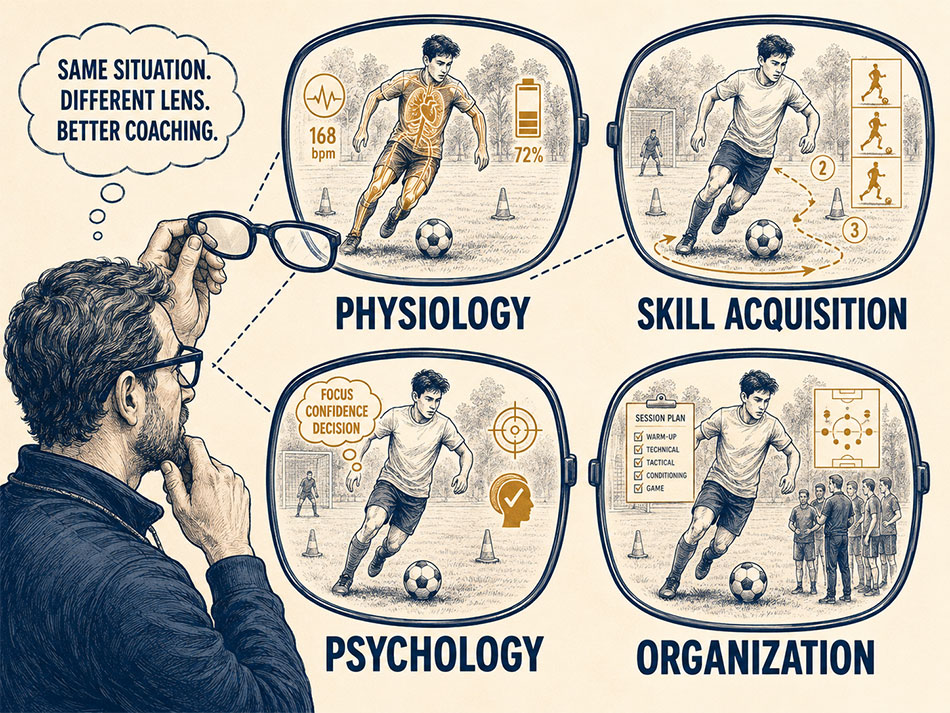
Figure 1: Meta-thinking creates a temporary step outside the current model so its assumptions can be inspected.
I consider meta-thinking one of the main protections against ideology. Not a perfect protection. Smart people can use sophisticated meta-language to defend the same old identity. But without the ability to inspect our own reasoning, updating becomes accidental.
I am not a professional philosopher
I should make one thing clear before defining anything: I am not a professional philosopher.
I have read philosophy, philosophy of science, psychology, statistics, and the books that happened to help with the problems I encountered in coaching. I have also probably misused a term, stretched an analogy, or connected ideas that a specialist would keep separate. A philosopher reading this may occasionally say, “This does not make freaking sense.” Fair enough.
The goal is not to win a departmental argument. The goal is to make the concepts useful without pretending the concepts are simple.
That requires a strange balance. Simplify too little and the article becomes inaccessible to the coaches it was written for. Simplify too much and the philosophy turns into motivational wallpaper. The working rule is the same one we use with training models: reduce the complexity enough to act, then keep the cost of reduction visible.
A map, not a copy.
What is a theory?
In everyday speech, “that is just a theory” usually means a guess. In science, a theory is closer to a structured explanation that connects phenomena through a causal or organizing story and has survived serious attempts to challenge it.
A hypothesis is a claim that can be tested. A theory is a broader narrative that tells us why a pattern occurs, how relevant variables relate, and under which conditions the explanation should hold.
The domain of validity matters.
Newtonian mechanics works extremely well at particular scales and conditions. It does not become useless because relativity and quantum mechanics are needed elsewhere. The problem begins when a theory that works at one level is treated as the final description at every level.
Coaching theories behave the same way.
A theory of muscle contraction explains events at the level of actin, myosin, ATP, and cross-bridge cycling. A theory of hypertrophy connects training exposure to structural adaptation. Theories of fatigue operate at multiple levels: isolated muscle, central regulation, perception of effort, motivation, task disengagement, and whole-body performance. Motor-learning theories explain how practice, information, feedback, and constraints change behaviour.
Each theory can be useful. None automatically owns the entire athlete.
Consider fatigue. At the local level, we can discuss force loss, metabolite accumulation, excitation–contraction processes, or substrate availability. In a whole athlete, fatigue may also involve perceived effort, expectation, pain, motivation, pacing, and the meaning of continuing. A theory that explains an isolated muscle preparation cannot simply be enlarged until it becomes a theory of why an MMA fighter stops pushing in the fourth minute of a round.
Different level. Different problem.
These levels and blind spots are summarized in Table 1.
| Level of explanation | Example theory or concept | What it can help explain | What it may miss |
|---|---|---|---|
| Molecular or cellular | Cross-bridge cycling, ATP turnover | How muscle contraction is produced | Meaning, pacing, motivation, task strategy |
| Tissue or organ | Structural adaptation, oxygen delivery | Local adaptation and capacity | Coordination and whole-task behaviour |
| Whole-body physiology | VO2max, critical power, fatigue models | System-level performance limits | Social and tactical context |
| Behaviour and skill | Perception–action, learning, decision-making | How solutions emerge in tasks | Some underlying tissue constraints |
| Person in context | Phenomenology, motivation, identity | Lived experience and relevance | Precise local mechanisms |
| Organization | Roles, culture, schedule, communication | Why the same program behaves differently in different clubs | Individual biological detail |
Table 1: Theories operate at different levels and inherit different blind spots.
Meta-thinking means knowing when a theory has been asked to do a job outside its domain. It also means knowing when to switch lenses rather than arguing that one theory must defeat the others.
There is nothing more practical than a good theory because a good theory directs attention and intervention. There is also nothing more dangerous than a good theory used everywhere.
What is wisdom?
Wisdom is harder.
A useful working definition is the contextual application of apparently contradictory truths. Knowledge gives you principles and proverbs. Wisdom helps you decide which principle applies, at what level, in what dose, and for how long.
“No pain, no gain” can be useful. “Listen to your body” can also be useful. “Champions outwork everyone” has a place. “More is not better” has one too. “Stick to the plan” and “adapt on the fly” are both printed on the walls of successful organizations, occasionally on opposite walls.
The contradiction is not always a problem to eliminate. It is information about context.
If an athlete habitually avoids difficult work, “listen to your body” may be permission to keep avoiding it. If an athlete treats every session as a character test, “no pain, no gain” may be the shortest route to stupidity. The proverb did not change. The athlete did.
Example of complementary-pairs and their tension is enlisted in Table 2.
| Domain | One principle | Contrary principle | Wisdom question |
|---|---|---|---|
| Talent~work ethic | Hard work beats talent when talent does not work hard. | You cannot make mulberry pie out of pig shit. | How much can training change, and when does selection matter? |
| Recovery~effort | More is not better. | Champions outwork everyone. | Is the athlete underexposed or unable to absorb more? |
| Skill learning | Repetition is the mother of learning. | Variety is the spice of skill. | Does the athlete need stabilization or exploration? |
| Planning | Stick to the plan. | Adapt on the fly. | Is deviation intelligent updating or avoidance of commitment? |
| Feedback | Tell them what to do. | Let them figure it out. | Is guidance reducing confusion or stealing the learning problem? |
| Capacity~expression | Build the engine. | Learn to drive the car. | Is performance limited by potential or by using it in context? |
Table 2: Wisdom as the contextual use of contrary principles.
The talent~work ethic pair is especially uncomfortable in youth sport. Coaches want to believe in development, and rightly so. Hard work matters. Practice matters. Opportunity matters. Yet people differ, and those differences are not all produced by coaching. To deny nature is as ideological as to treat current performance as destiny.
The “mulberry pie” proverb is crude. The problem it points toward is not.
Wisdom detects the level at which each truth operates. A group-level truth may fail for an individual. A principle that is useful over a career may be wrong for this week. A protective rule during rehabilitation may become a ceiling after rehabilitation. The appropriate emphasis moves.
That movement is the squiggle sense.
Knowledge, philosophy, and wisdom
The terms overlap, which is why they became tangled in the original course (and I am still unsure how to untangle them). Their different roles are shown in Figure 2.
Knowledge refers to information, concepts, skills, and justified claims. Philosophy inspects the assumptions behind what counts as knowledge, what matters, and how action should follow. Wisdom concerns the quality of judgment when several relevant truths, values, and consequences collide.
A person can have sophisticated philosophy and poor wisdom. Quoting Popper, Nietzsche, Hume, or Taleb does not guarantee a good call when the athlete is exhausted, the competition is close, and the staff disagree. Philosophy can become another costume.
A coach can also act wisely without being able to articulate a formal philosophy. Experienced coaches often recognize patterns, adjust the dose, and manage people well without using any of the vocabulary used here. The uncomfortable question is whether this is wisdom, tacit knowledge, or success partly supported by circumstances and luck.
Probably some mixture.








Responses