
Managing Peak Demands and Rehabilitation in Football – Part 3: Programing Return to Sport Process After the ACL Injury

Introduction
This is the third and final paper in this series. In the first two parts, we explored the demands of football actions, as well as the testing and monitoring strategies used during rehabilitation. In this final paper, we will connect those elements through practical programming ideas and example drills for specific positions. The focus now shifts to one of the most sensitive phases of the process: the final week before the player returns to full training with the team.
Two Lessons Learned from the Return-to-Sport Process
When I was working as Head of Performance in one of our clubs, we established a new internal unit dedicated to the return-to-sport process. The club already had some informal practices in place, but we wanted to make the process much more precise and clearly define all the necessary steps, roles, and responsibilities. Through discussion, collaboration, and practical work, we built a solid environment with the required equipment, procedures, and staff involved. This sector is still active in the club today.
I will not go into detail now about how we built the whole structure, and we can discuss that another time. For now, I would like to focus on some of the main conclusions we reached and a few of the challenges we faced. Two of them stand out in particular. The first was that, after the final assessment before a player returned to team training, we often noticed a lack of velocity-related variables and power values. To explain the process a little more clearly: a player entered the return-to-sport sector when the injury was considered serious, and we had one practical rule regarding time lost from team training. If the player missed more than two weeks of team work, he would usually spend one or two weeks working with the rehab coach, sometimes in a mixed format with parts of team training included. If the absence was longer than that, then the rehab coach took the leading role in the process.
The first phase of rehabilitation started in the medical and physiotherapy department. Once the medical staff felt that the player was ready for more intense and sport-specific demands, they gave clearance for the next step, and this was where the rehab coach took over. The initial testing procedures were performed together with the medical staff, and if the player passed that stage, we entered the more specific phase of rehabilitation.
When I say specific, I mean specific to the player’s age, injury profile, position, game model, and team demands. After that, the second and more comprehensive testing procedure was performed just before the player re-entered full team training. And this is where we noticed a lack of velocity exposure, or drops in max velocity and max acceleration values, as well as a reduced ability to produce force quickly in isolated muscle actions. We noticed this most often during fast contractions of the hamstring muscles, especially after hamstring injuries or ACL injuries.
The second thing, and in my opinion one of the biggest problems in the RTS process, is that we sometimes forget to work enough on the endurance component. The player needs to be ready for the demands of the team, not only from a medical or strength perspective, but also from the perspective of repeated football actions performed within the structure of training.
For example, if we analyse just one set of a 4v4 game on 30 × 40 m, with two touches, two small goals, and 4 minutes duration, one player can roughly accumulate:
- around 450–600 m of total distance
- approximately 110–150 m/min
- around 8–20 accelerations
- around 8–20 decelerations
- approximately 1–4 shots
- around 8–20 passes, depending on role, team style, and the continuity of play
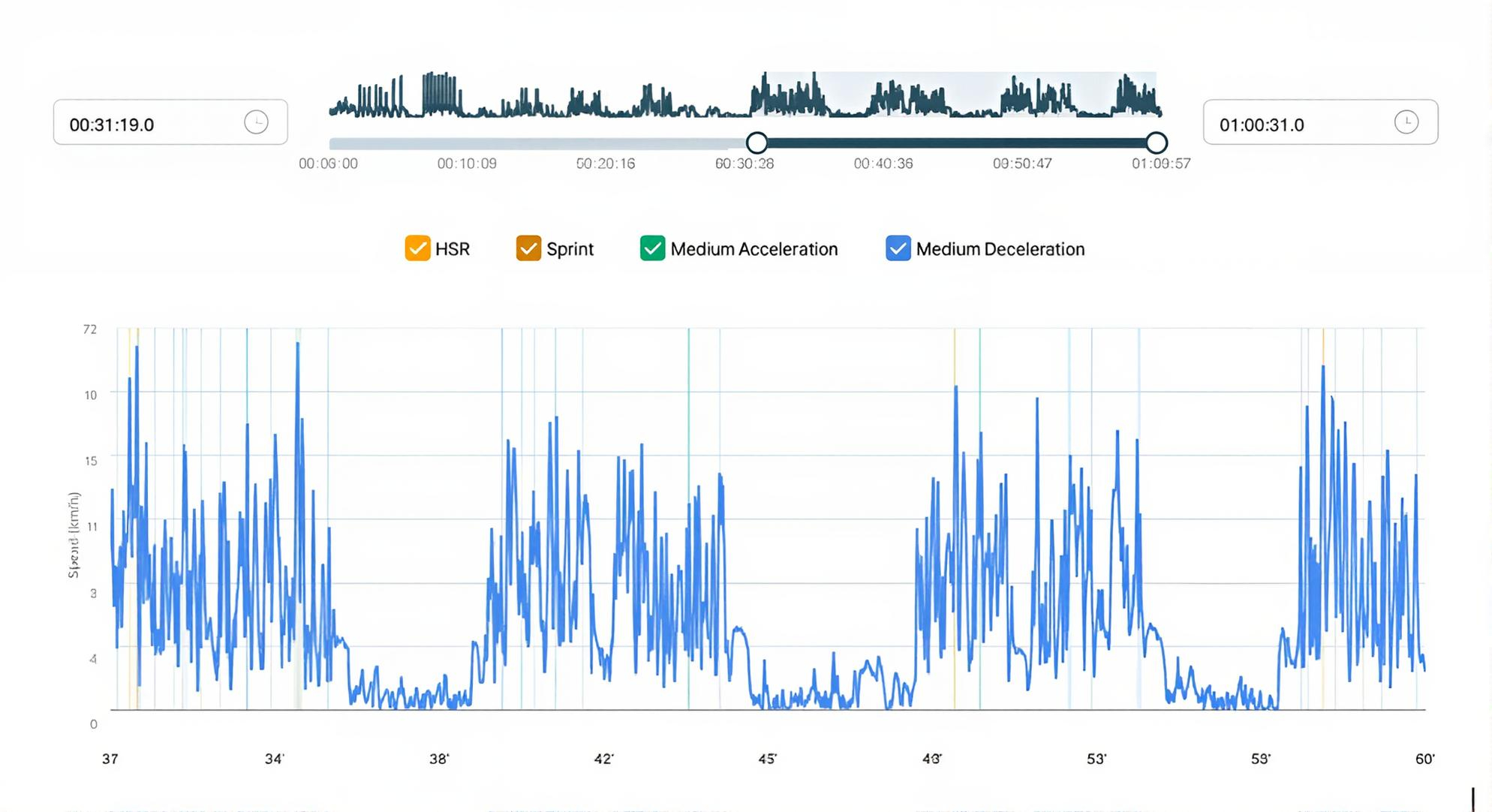
Picture 1. Raw velocity graphs of players activity during 4v4 game.
And this is only one set. In team training, the player may be exposed to several repetitions of similar football-specific demands, on top of all the tactical, technical, and cognitive requirements of the exercise. That is why it is not easy to recreate these demands in an individual RTS session. To do it well, you need to be creative, but also highly professional. You need to understand the position, the game model, the age group, the load of the team on that specific day, and the weekly structure of the microcycle. The goal is not only to prepare the player to run again, sprint again, or complete isolated drills. The goal is to prepare him to tolerate and perform the real demands of football training for his team. That means being able to reproduce the intensity, density, timing, and decision-making demands of the exercises that the team is actually performing. This is where, in my opinion, endurance and football-specific conditioning become one of the most underestimated parts of the return-to-sport process.
Return to Sport of an Athlete Who Suffered ACL Injury
There are many injury-specific scenarios in football, and it would be impossible to cover all of them in detail. For that reason, I will try to present the logic behind building a training session for a player recovering from an ACL injury. In this example, the player is in the final stage of the process and is about to rejoin the team. We will focus specifically on the last week or two of the return-to-sport process before full integration into team training. Below, you can find his isokinetic values. This report summarizes the isolated quadriceps and hamstring function of the athlete 8.5 months after reconstruction of the left ACL. The testing shows that range of motion and general maximal strength are satisfactory, but several important deficits are still present, particularly in the hamstring function of the operated leg, explosive force production, and hamstring-to-quadriceps ratios.
Table 1. Assessment Summary Table of an athlete who suffered ACL injury
| Measure | Expected Result | Left (Operated) | Right | Meets Criterion |
|---|---|---|---|---|
| Knee extension deficit (°) | 0 | 0 | 0 | Yes |
| Knee flexion deficit (°) | 0 | 0 | 0 | Yes |
| Maximal strength relative to body mass | >300% | 358% | 340% | Yes |
| Maximal quadriceps strength asymmetry (%) | <5% | / | -5.4% | Yes |
| Maximal hamstring strength asymmetry (%) | <5% | -21.5% | / | No |
| Explosive quadriceps strength asymmetry (%) | <5% | / | -10.8% | No / borderline |
| Explosive hamstring strength asymmetry (%) | <5% | -12.9% | / | No |
| Hamstring-to-quadriceps ratio at 60°/s (%) | 60–62% | 56.2% | 65.8% | No |
| Hamstring-to-quadriceps ratio at 180°/s (%) | 70–75% | 50.2% | 68.4% | No |
At 8.5 months after left ACL reconstruction, the athlete shows full restoration of knee range of motion, as both extension and flexion deficits are absent. In addition, maximal strength relative to body mass is above the expected threshold on both sides, which suggests that the player has regained a satisfactory general strength base. However, despite these positive findings, isolated muscle function is not yet fully satisfactory. The main issue is the hamstring function of the operated left leg. A 21.5% asymmetry in maximal hamstring strength and a 12.9% asymmetry in explosive hamstring strength indicate that the injured side still underperforms in comparison with the non-operated side. This is especially important in ACL rehabilitation, because hamstring capacity plays a major role in knee protection, deceleration control, and high-speed running actions. There is also a deficit in explosive quadriceps strength, where asymmetry remains outside the desired threshold. Although maximal quadriceps strength appears acceptable, the ability to produce force quickly is still not fully restored. This suggests that the player may look “strong enough” in general testing, while still lacking the rapid force qualities required for football-specific actions. The hamstring-to-quadriceps ratios are also below the desired values at both testing velocities. At 60°/s, the ratio on the operated side is 56.2%, below the expected 60–62%, and at 180°/s it is 50.2%, clearly below the expected 70–75%. These findings reinforce the conclusion that the hamstrings, particularly at higher-speed contractions, remain a key deficit.
Designing the Microcycle
No matter how much time has passed since the injury, this player still presents several issues that need to be addressed, which means that his microcycle must be planned carefully. Let us assume that we will use the next two weeks not only to further develop these physical qualities, but also to work on specific football patterns. The main goal in this phase is to bridge the gap between isolated rehabilitation outcomes and the real demands of team training. An example of the microcycle structure used in this period is presented in the figure below.
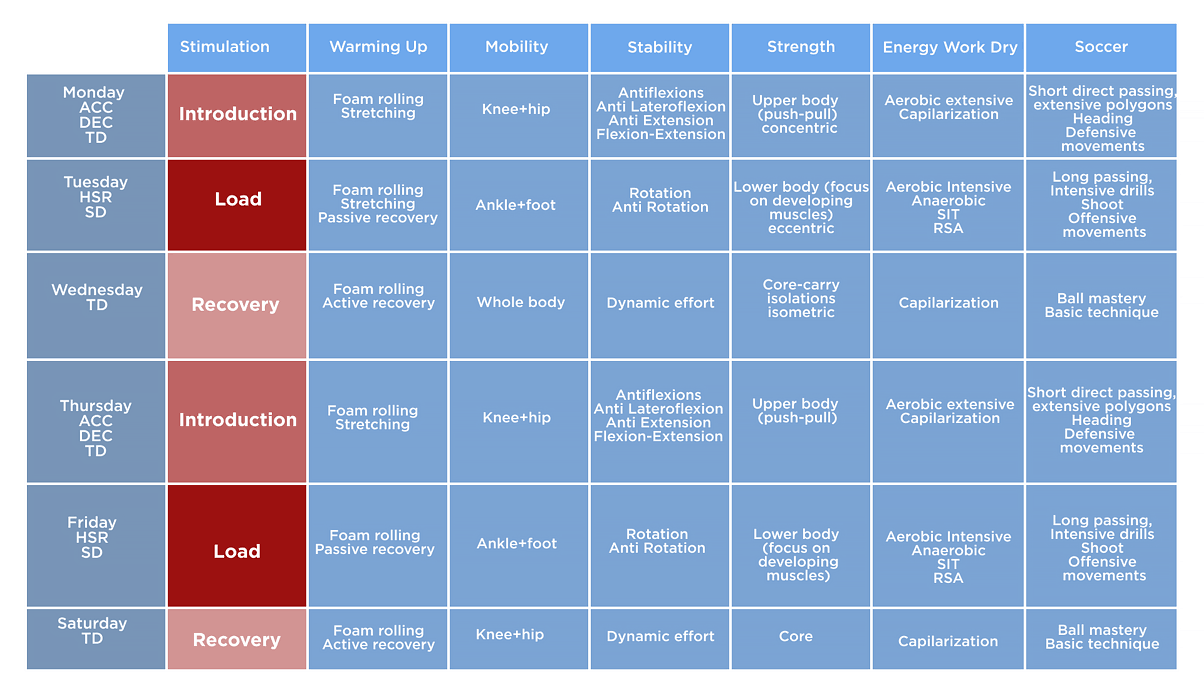
Picture 2. Microcycle structure in return to sport sector
The rehab coach is the main figure in this phase, as he is responsible for the overall periodisation of the process and the distribution of training content across the week. In this example, we use a two-week mini-block structure, built around three types of sessions: introduction, development, and recovery. This cycle is then repeated twice. Each day has a specific purpose and addresses one main objective within the final phase of return to sport.
The introduction sessions are used to prepare the player for the upcoming demands of the week. These days include mobility work, trunk stability, basic strength exposure, extensive aerobic work, and simple football actions such as short passing, heading, and defensive movements. Their role is not to create high fatigue, but to establish movement quality, tissue readiness, and technical connection with football-specific patterns.
The development sessions, which in this example are placed on Tuesday and Friday, are the key loading days of the microcycle. On these days, we target the fast contractions that were identified as deficient during testing, with the aim of improving the player’s profile and restoring the neuromuscular qualities of the involved musculature. In this ACL example, that mainly refers to the ability to produce force quickly, especially in the lower limb, while also restoring confidence in high-speed and football-specific actions. These sessions include eccentric lower-body strength work, more intensive running exposures, and football drills with greater demand on accelerations, decelerations, changes of direction, and repeated explosive actions of higher energy demands and velocities. The running volumes are adjusted according to the player’s match values and his positional demands, rather than being prescribed in a generic way.
The recovery sessions are used to reduce accumulated fatigue while still maintaining movement, coordination, and football contact. These days include active recovery, whole-body mobility, dynamic trunk work, lighter strength tasks, capillarisation-based conditioning, and basic technical football content such as ball mastery and simple passing patterns or football tennis.
Table 2. Grouping the variables from internal and external load, subjective and objective markers (Model in progress).
| Energy System | Volume Variables | Intensity Variables |
|---|---|---|
| Oxidative (Aerobic Dominant) | Total Distance (TD) Duration of Session Heart Rate Exertion (time >85% HR max) |
Distance per Minute (m/min) % Time at High HR Zones (>85% HR max) High Metabolic Power Events Session RPE (sRPE) |
| Glycolytic (Anaerobic Lactate Dominant) | High-Speed Distance (HID) Sprint Distance (SPR) Number of Accelerations and Decelerations (Acc/Dec) |
HID/TD (%) Sprint Distance / Total Time (SPR# / min) Acc/Dec per Minute (Acc/Dec# / min) |
| Neuromuscular (Mechanical Load) | Total Number of Sprints (#) Number of Turns / Cuts (#) Player Load (AU) Number of high intensity acc and decelerations |
Player Load per Minute (PL/min) Number of High-Impact Events per Minute (e.g., Turns, Jumps, Contacts) High intensity acc and dec per minute |
From a football perspective, the most important work on Tuesday and Friday is linked to the player’s match profile. However, the other days are also important, especially Monday and Thursday, but with a different focus. On these introduction days, I try to focus more on defensive movements with players who have a stronger glycolytic component, as described in Table 1. On Tuesday and Friday, we focus more on offensive movements, with longer runs at higher velocities, where we try to trigger more neuromuscular variables. Still, there is always a combination of all three components. On Wednesday and Saturday, the focus is more on the oxidative side.
As shown in figure 3, this position usually starts the game with relatively high glycolytic and neuromuscular demands, as the first 15 minutes are often characterized by fast starts, transitions, repeated accelerations, and sprinting actions. Between 15 and 45 minutes, oxidative load becomes higher, while glycolytic demand slightly decreases, although neuromuscular load often remains high due to pressing, ball control actions, and repeated explosive movements. Between 45 and 60 minutes, the game often shifts more toward possession phases, with high oxidative demand but lower glycolytic stress, while in the final 30 minutes a drop in glycolytic and neuromuscular output is often observed due to fatigue. This is particularly relevant when planning the return-to-sport process, because the player must not only recover isolated physical qualities, but also tolerate the changing metabolic and mechanical demands that appear across different phases of the game.
Table 3. Changes in oxidative, glycolytic and neuromuscular loads during the game for winger/striker position
| Time Period | Oxidative Load (TD, HR) | Glycolytic Load (HID, Sprints) | Neuromuscular Load (Acc/Dec, Player Load) | Comment |
|---|---|---|---|---|
| 0–15 min | Medium | High | High | Fast start, transitions |
| 15–45 min | High | Medium | High | Ball control, pressing |
| 45–60 min | High | Low | Medium | More possession |
| 60–90 min | Medium | Low | Low | Fatigue observed |
For that reason, the football content in the development sessions should progressively expose the player to actions that reflect his position: open-field runs, diagonal movements, accelerations into space, decelerations after attacking runs, changes of direction, pressing actions, and ball actions performed under speed.
In recent months, there have been many valuable resources on the interpretation of GPS data and on how important it is to properly understand every action, its context, and the correct structure of each drill. I found this especially useful a few years ago when one of my responsibilities was to make sense of performance data, and GPS analysis was a major part of that work. One of our coaches wanted me to track matches live and observe what was happening throughout the game, and this helped me a lot in providing context to the numbers. More importantly, it allowed me to understand what was actually behind each number and which football action had produced it.
One of the approaches I particularly liked was analysing raw GPS data minute by minute, or in segments of 5 to 15 minutes, and then observing what was happening with individual variables or groups of variables. This was the idea I wanted to implement in our Ultrax software, and in the end, we managed to do it. As presented in the video below, we were able to interpret each action from both a velocity and acceleration perspective, including how many meters were covered, at what speed, and what action preceded that effort for the athlete.
Video 1. Analysing effort during game in Ultrax software
I believe that the work-to-rest ratio is one of the key factors that differentiates the real impact of accelerations and other values on the player’s body. In other words, it helps us understand whether a given action represents more of a neuromuscular stimulus or a glycolytic/metabolic one. With this type of analysis, we can then plan and simulate in training the same kinds of actions that the player performs during matches.
Introduction Day
The aim of this introduction day is to expose the player to a controlled football-specific load while maintaining freshness and movement quality. In this type of session, we try to reach approximately 65–75% of the player’s total match volume for his position, while also accumulating around 60–70% of typical game values for accelerations and decelerations, mainly in the range of up to 2.5–3.0 m/s². At the same time, the session includes a high number of short passing actions, which makes the overall load profile similar to what the team would usually perform on MD+3 or on an introduction day within the weekly structure.
Table 3. Example of session structure for introduction day
| Section | Main goal | Content | GPS / load target |
|---|---|---|---|
| Session goals | Reconnect the player with team-like introduction day demands while maintaining control of fatigue, lower velocities | Approx. 65–75% of total match volume for the player’s position; 60–70% of typical match values for accelerations and decelerations, mainly up to 2.5–3.0 m/s²; high number of short passing actions; profile similar to MD+3 / introduction day | Controlled volume, moderate mechanical load, repeated short football actions, aerobic-extensive profile |
| Block 1 – Yesterday’s reactions | Check and manage reactions from the previous session | Readiness check, subjective feedback, local soreness, stiffness, pain response, muscle tone, joint reaction | Helps adjust the dose of the day before loading begins |
| Block 2 – MFO / Stretch / Mobility | Prepare key regions and improve movement quality | Foam rolling, ball rolling, stretching, thoracic and lumbar spine mobility, shoulder opening patterns, arm “letters,” hip mobility | Improves tissue readiness and movement quality before upper body work |
| Block 3 – Core / Activation / Proprioception | Activate stabilizers and prepare the body for football-specific demands | Connected with the developmental phase – most likely explosivity phase (last two weeks of RTS). MB chops and lifts, adductor rapid eccentric work – terminal ROM, overcoming hip flexor activation 90–100% MVC. | |
| Block 4 – Power / Plyo / Strength | Maintain or develop force qualities without excessive fatigue | Push-pull gym work, upper-body strength, MB throws | Low to moderate neuromuscular load; preserves strength qualities while keeping freshness for the field |
| Block 5 – SADA | Prepare for the first football task through speed-related qualities | Speed, acceleration, deceleration, agility; foot-frequency drills, leg swings, prime exercises linked to the first TE-TA drill. More oriented toward shorter distances up to 20 m, combined with defensive movements | Controlled exposure to movement qualities that will appear in the football part; prepares the player biomechanically and coordinatively |
The session begins with 5 minutes on the bike to raise body temperature, followed by foam rolling or ball rolling, with approximately 30–60 seconds per muscle group, depending on the player’s needs and the areas that were more loaded in previous days. This is followed by a mobility section, with a particular focus on the thoracic and lumbar spine, including stretching, shoulder mobility work, opening patterns with the arms, and arm “letters.”
The next part includes activation, core, and proprioception work. Let us assume that the player is in the explosive phase of development. I like to divide the process into three phases: accumulation, intensification, and explosivity. In each phase, I still try to expose the player to all four main types of contraction every week: isometric, concentric, eccentric, and stretch-shortening cycle (SSC). However, in the explosivity phase I use different methods and place a greater emphasis on qualities related to rapid force production and this is what this player needs right now. In this phase, I often use quasi-isometrics, rapid eccentrics, medicine ball throws or pure concentric work, functional isometrics, drop jumps, and depth jumps, often combined with cluster sets or heavy-duty sets in order to keep neural drive high. Within Block 3, the goal is to activate the muscles that will be involved later in the session, but also to prepare the player for the demands of the next block. For example, this may include isometric adductor overcoming work, hip flexor activation, rapid eccentric work for the adductors, and core exercises such as chops and lifts.
In the gym-based main part, when the player still needs some hypertrophy-oriented work, we use a push–pull format, alternating exercises in pairs. The first block includes floor press at 70% of 1RM, 2–4 × 6–8 repetitions, RIR 2–3, followed by incline bench row at 70% of 1RM, 2–4 × 8–10 repetitions. The second block includes dumbbell press from a lunge position, 2–3 × 8 repetitions, followed by pull-ups, 2–3 × 6–8 or 3+3+3+3 repetitions model. If the player is unable to perform the pull-ups independently, a resistance band can be used, or the exercise can be modified into an assisted version. Between exercises, a pause of around 1 minute is recommended, and after each two-exercise block, a rest period of 2–3 minutes is used. During these breaks, players can also perform elements of basic technique work. The field-based part begins with a warm-up and dynamic flexibility section, more aggressive and done in terminal range of motion, including various leg swings and foot-frequency drills, in order to better prepare the player for the next football task. The main football content is organised through an extensive aerobic polygon with elementary technique and dry running. The player performs 2–3 × 7 minutes, with 1 minute of hydration break between sets. The polygon includes the following sequence: wall passing technique, transfer movement, zig-zag dribbling, passing with the coach in a one-two action, dribbling, agility through a position specific pattern, passing into a small goal, receiving the ball again, weaving through cones, playing the ball, and finishing with a strike on goal, with the main objective being precision and control in the final action.
The second drill can be more intense, with a greater emphasis on accelerations and decelerations, but also on defensive movements in general and defensive transitions over short distances. This is especially important because many ACL injuries happen during defensive actions, particularly when a player is reacting to the movements of an opponent. For that reason, these situations need to be implemented into the drill design. One option is again to use a polygon format, but with a more reactive and defensive focus. In the first part, the player starts by moving according to the coach’s movements for 5–10 seconds. After that, he jogs to the next station, where he must block passing lanes behind him across three small goals. At this point, the coach can use numbers, number combinations, or simple mathematical commands to indicate which goal or zone the player has to cover, or the player can simply react to the coach’s body position and movement. In this section, we usually perform 3–5 actions before the player walks or jogs to the next station. In the next part of the drill, we focus on defensive transition. He is a winger, right, so he first combines with his midfielder, represented by the coach, and then makes a 10–15 m run in depth, behind the defensive line or behind cones. The pass is intentionally missed, and the player must then make short contact with a dummy, perform a 60–90° change of direction, recover quickly, and run again for 10–15 m. At that moment, the coach plays a pass behind him, and the player must react, slide, and recover the ball.
This task can be organised in 2–3 sets of 4–6 repetitions, depending on the player’s status, the overall session load, and the specific return-to-sport objective. The aim is to expose the player to short, reactive, football-specific defensive actions that combine perception, decision-making, body contact, change of direction, and high-intensity movement. Overall, this session is designed to combine introductory football exposure, movement preparation, controlled strength work, and aerobic-extensive field load. So, something similar to what Taberner et al. recommended back in 2025.
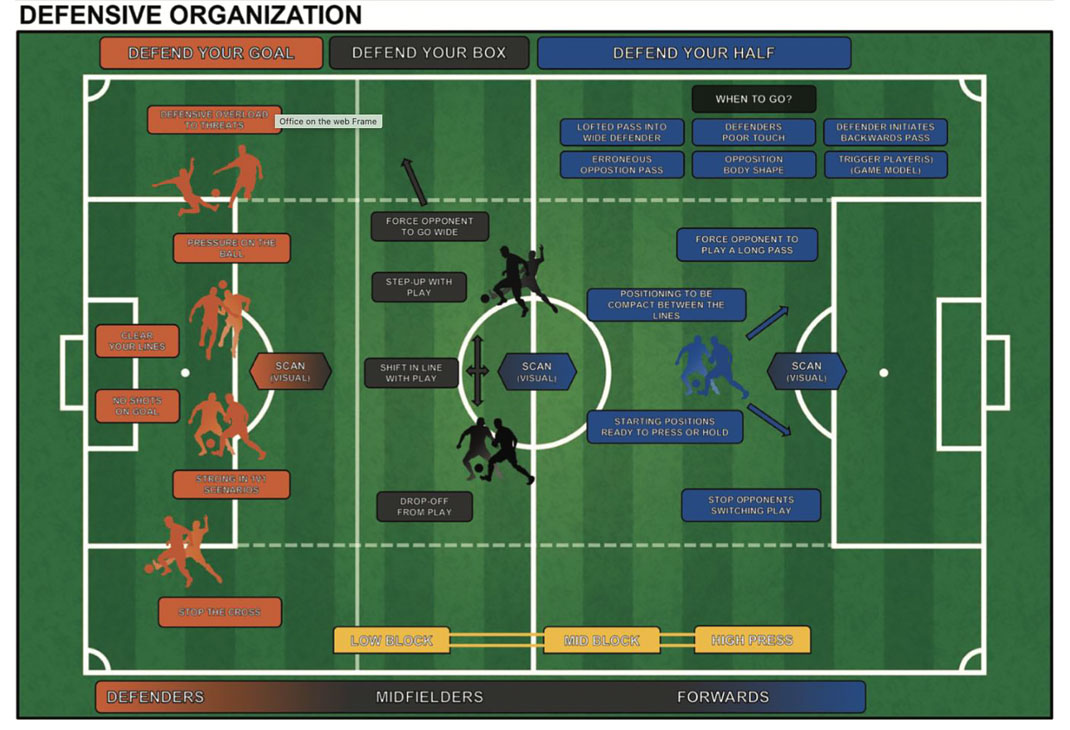
Picture 3. Defensive organization separated into 3 subphases: (1) defend your goal, (2) defend your box and (3) defend your half and key elements relative to each phase/position. Key defensive principles for consideration in drill design may include (1) delay, (2) compactness, (3) depth, (4) balance, and (5) discipline. Refer to the club’s game model to provide the most ecological challenge. (Matt Taberner et al., 2025)
The goal is not to create excessive fatigue, but to gradually reconnect the player with the demands of football actions, especially through short passing, moderate running exposure, and a controlled number of accelerations and decelerations that reflect both his positional match profile and the team’s normal training structure on this type of day. During these actions, I like to say that the player should almost have a “headache” afterwards, because the decision-making, uncertainty, and the mental and emotional demands of the drills should also be emphasized.
Hint: speak with the head coach about what he expects from that position and from that particular player, and then try to simulate those actions in your training design.
Development Day
On the development day, we focus more on offensive football actions, higher velocities, and a greater density of work within those actions. When explaining to coaches how hard the player is working, or what “intensity” really means, I like to describe it through three dimensions. First, there is the type of intensity itself. In football, we can think of different intensities depending on the action and its demands, to be more precise or not 😀, but I will go with 3 types of intensities in football games (intensity in SSG, MSG and LSG). Second, there is volume, meaning how much total work we cover within each intensity zone. Third, there is density, or how often the player enters those intensity zones during the session. Finally, and perhaps most importantly, there is the player’s true effort in those movements. In simple terms, we must ask whether he is entering those actions at 30–50% of his capacity, or at 100% of what he can actually produce.








Responses