
Philosophy Behind Agile Periodization: Thinking About Thinking – Part 2

In the previous part, we distinguished theory, knowledge, philosophy, and wisdom, and placed integrative pluralism between relativism and absolutism. This part examines what happens when a method becomes an identity, and how to keep updating without losing direction.
Ideology is philosophy that stopped updating
Ideology is what happens when a useful belief hardens into identity and stops updating.
“I use squats” becomes “I am a squat guy.” “This athlete may benefit from machines” becomes “We are a no-machines facility.” “This conditioning method fits the current problem” becomes “We do not believe in jogging.” The method is no longer a tool. It becomes a badge.
Once identity is attached, criticism feels personal. Evidence that should update the model is treated as an attack on the self or group. The coach defends the method rather than testing it.
Relativism and absolutism can both produce ideology. The absolutist closes the system by declaring one truth. The relativist closes it by making every belief unfalsifiable. Different route. Same destination.
A useful definition is this:
Ideology is philosophy that has forgotten it is a tool.
Agile Periodization does not pretend that coaches operate outside ideology. We always begin with priors: beliefs about what tends to work, what matters, and what kind of intervention is acceptable. The goal is to make those priors transparent and revisable.
Being aware of your ideological prior does not make you dogmatic. It makes you epistemologically honest. Use Warning 1 to inspect that attachment.
Complete the sentence: “I am the kind of coach who…”
Then inspect whatever follows. Identity can support consistency, but it can also protect a method from evidence.
Updating without losing direction
A common fear is that constant updating destroys conviction. If every plan is provisional and every model partial, how can the coach lead?
By separating direction from certainty.
You can hold a strong current position while stating the conditions under which it will change. You can establish non-negotiable values while updating the methods used to protect them. You can commit to a sprint (a microcycle in Agile Periodization vocabulary; borrowed from the SCRUM Agile framework (Hol 2019)), microcycle, or camp without pretending the first version is perfect.
This is close to Bayesian reasoning, which we will revisit later. We begin with a prior belief based on research, experience, and previous cases. We observe evidence from this athlete. We update the weight of the belief rather than starting from zero or defending it forever.
The average treatment effect tells us what happened on average in a population. The athlete in front of us may show a heterogeneous response. The prior is useful precisely because we do not know the individual response yet. The individual response matters precisely because the prior is not destiny.
How a method becomes an identity
Methods rarely become ideologies in one dramatic step. The change is gradual.
At first, a coach uses a method because it appears to solve a problem. Squats help build lower-body strength, so the coach uses squats. Machines provide a controlled way to load tissue, so the coach uses machines. High-intensity intervals improve a particular conditioning problem, so the coach prescribes them.
Then success strengthens the association. The coach becomes known for the method. Athletes, colleagues, and social media repeat the label. The squat is no longer one exercise in a toolbox; it becomes evidence of seriousness. Machines are no longer one loading option; avoiding them becomes evidence of being “functional.” Conditioning is no longer a family of methods; the club becomes a “high-intensity” club.
The method starts doing social work.
That is the dangerous stage. Abandoning or modifying the method now costs more than changing a program. It threatens reputation, belonging, and the story the coach tells about himself. Opposing evidence becomes emotionally expensive.
The same process happens around scientific identities (Table 1). “I use data” can become “data are objective and intuition is backward.” “I follow evidence” can become “the study has already made the decision.” “I use ecological dynamics” can become “instruction and isolated work are always wrong.” The original insight may be valuable. The identity makes its boundary invisible.
Meta-thinking asks a blunt question: if the evidence changed, could you change without losing who you think you are?
If the honest answer is no, you are no longer holding a tool. The tool is holding you.
The no-machines coach
Imagine a coach who built a reputation around free weights and compound movements. The position may have emerged from reasonable concerns: machines can constrain movement, equipment may not transfer directly to sport, and compound exercises can train several tissues and coordination demands at once.
Then an injured athlete needs a stable way to load a specific tissue. A machine offers exactly that. The practical question should be whether the tool fits the current aim, dose, and athlete. The ideological question is whether “people like us” use machines.
One question concerns training. The other concerns identity.
The no-jogging club
A club adopts high-intensity work because slow, generic conditioning had previously displaced more relevant training. Again, reasonable. Over time the slogan becomes “we do not jog.” Now low-intensity work is rejected even when it could support recovery, aerobic development, or additional volume at tolerable cost.
The rule that once protected specificity now blocks a useful option.
The evidence-based coach
A coach reads a study reporting an average improvement under a particular protocol. The finding should update expectations. Instead, “science says” becomes a shield against context. The coach ignores differences in population, timing, competing demands, and individual response because questioning application feels like questioning science itself.
That is not evidence-based practice. It is citation-based obedience.
| Useful starting position | Identity version | Information that becomes hard to see |
|---|---|---|
| Squats are useful for many strength problems. | I am a squat coach. | Athletes and phases where another exercise fits better. |
| Machines can be overused or poorly transferred. | We never use machines. | Controlled local loading, rehabilitation, and practical constraints. |
| High-intensity work can be time-efficient and specific. | We do not jog. | Low-cost aerobic volume and recovery-oriented exposure. |
| Research should inform decisions. | Science has already decided. | External validity, context, values, and heterogeneous response. |
| Discovery supports learning. | Instruction is always bad. | Novices, safety, task confusion, and moments when guidance reduces useless search. |
Table 1: The shift from a useful position to an identity-protecting ideology.
The antidote is not to avoid identity entirely. Teams and coaches need principles. Shared identity can coordinate action and protect standards. The point is to keep the method falsifiable and the value separate from the current implementation.
You may value athlete development without believing one exercise develops every athlete. You may value evidence without pretending the latest paper contains the program. You may value representative practice without banning every isolated task.
Values can be stable. Methods should be allowed to move.
The average person does not walk into the gym
Research often estimates an average treatment effect. The average is not fictional in the sense of being useless; it summarizes what happened across a sample and provides a rational starting point. But the average participant does not arrive for training on Monday.
An individual does.
That individual may respond more, less, differently, or not at all. The difference can reflect biology, training history, adherence, measurement error, concurrent stress, expectations, technique, or an interaction we did not model. Calling every deviation an “individual response” can become lazy, but ignoring heterogeneity is worse.
This creates another complementary pair:
Related Articles
Philosophy Behind Agile Periodization: Thinking About Thinking – Part 1
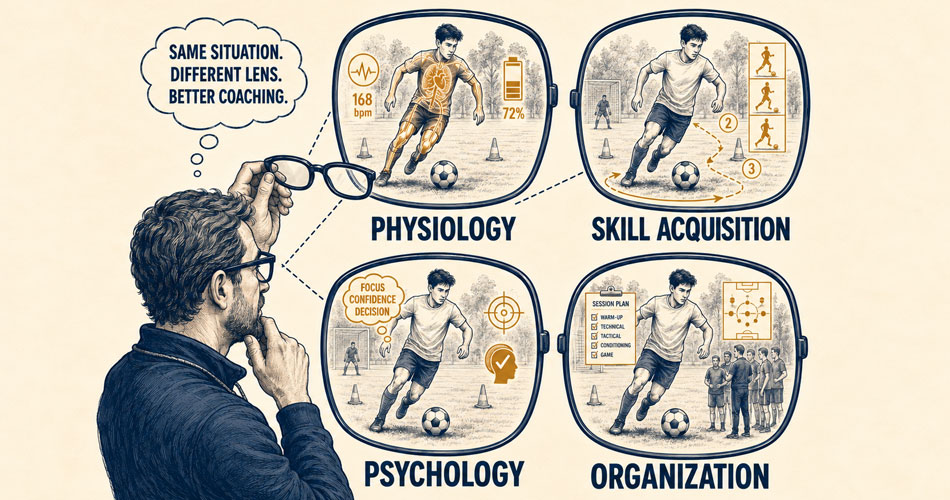
An athlete has a poor session. One coach sees fatigue, another low motivation, a third a task that’s too hard. The event didn’t change. The filter did. Part 1: a good theory becomes dangerous when used everywhere.

Developing a Philosophy for Life & Coaching
Establishing a philosophy is a fundamental process not only for coaching but for life itself. This philosophy underpins your everyday actions and behaviours and influences how you react to specific situations and environments that you may encounter throughout your life.

Agile Periodization in Personal Training: Podcast Summary with Pascal Bauer
In my recent appearance on the Personal Trainer Alliance podcast hosted by Pascal Bauer, we dove deep into a subject that’s long overdue for practical coaching circles—Agile Periodization in personal training.

Philosophy Behind Agile Periodization: Why Philosophy Matters – Part 2
A jump score drops. Do you cut training, repeat the test, or ask what happened last night? The number can’t decide. You do. Part 2: data give you an is, coaching needs an ought.




Responses