
Designing Strength and Conditioning Programs

Most programs look good on paper. Clean phases, logical progressions, long-term structure that makes sense in theory.
Then you walk into the gym. One rack, a large group, limited time, and an in-season schedule. That is where many well-designed programs start to crack.
The real issue is not knowledge. It is context. Most periodization models assume ideal conditions: full control over the schedule, equipment availability, and fresh athletes ready to train. That is rarely the case in team or group environments.
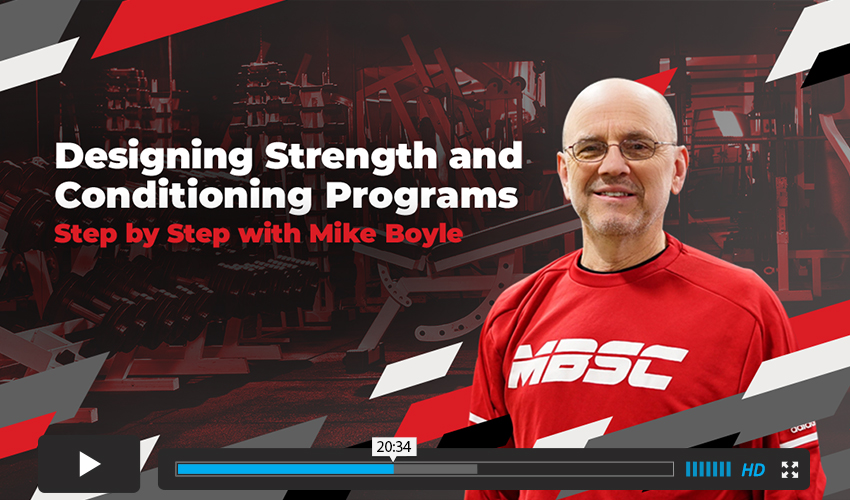
This mini-course approaches program design from the bottom up. Start with constraints such as facility limitations, group logistics, and the competition calendar, and then build from there. Instead of chasing optimal models, the focus is on creating something that holds up under real-world pressure.
Mike explains his philosophy of balancing risk and benefit, aiming for a workable middle ground. He outlines realistic strength standards for males and females, walks through practical phases such as base, strength, and accumulation, and shows how programs must adapt across off-season, pre-season, and in-season. He also breaks down what a single session should include, from tissue quality and warm-up to power and strength work.
The emphasis is not on perfect theory. It is on robust design that survives contact with reality.
If you are responsible for building programs that have to work in real conditions, this course is worth your attention.
Mike Boyle was kind enough to share this short course with Complementary Training members on strength and conditioning program design.




Responses