
Prescribing Strength Training for Team Sports – Part 4

In case you missed the previous part of this video series, click here to watch Part 3 on Prescribing Strength Training for Team Sports.
The percent-based approach sounds straightforward: test a 1RM, use percentages to prescribe loads, proceed. In practice, it has real problems.
The Problems
First, you need to know 1RMs. Fine for squat and bench, but what about push press, dumbbell rows, or the dozen assistance lifts you program? You can use conversion tables—Dan Baker published good ones—to estimate loads for untested exercises. They work on average. Not precise, but a starting point.
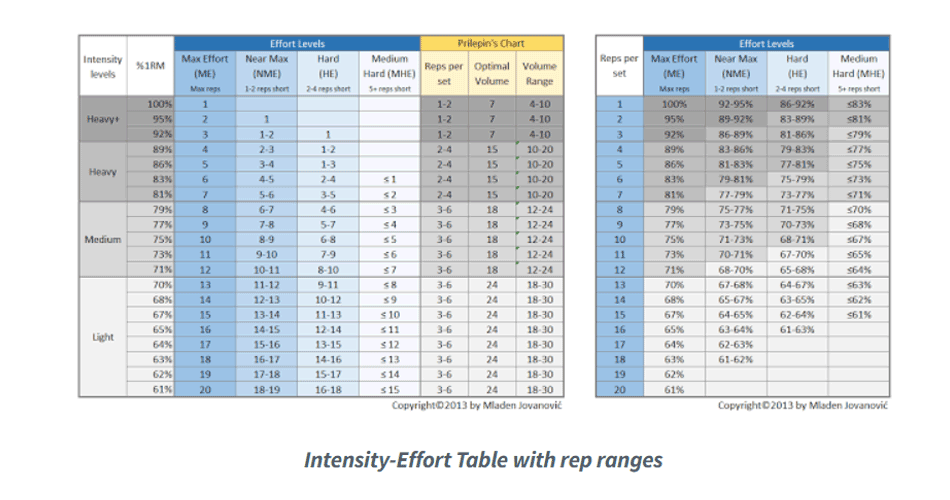
Second, even if you know the 1RM, you don’t know the reps-max relationship. At 80%, one athlete gets four reps, another gets thirteen. At 90%, some manage one rep, others six. Generic tables give averages. Averages don’t tell you where your athlete sits.
You could build individual profiles—test reps to failure at various percentages—but with team sport athletes running through a dozen exercises, there’s no time. One shortcut: have them do one set to failure at 80% and adjust your tables. Still not perfect.
Third, prescribing progressions. Even if you know the 1RM and reps-max profile, now what? Add 2.5% per week? Drop reps, increase load? You need a strategy. Knowing the 1RM doesn’t tell you how to progress.
Fourth, variability. Athletes don’t show up the same every day. They come in from a match, and that prescribed 85% feels like 95%. If your prescription is based on a peak 1RM from a good day, you’ll have problems when they’re running on fumes.
That’s why I use the “everyday maximum” as the prescription 1RM. Not the arousal-fueled number from a test day with loud music. The everyday max is what they can lift on their worst day. Conservative, but it keeps the program from crashing when fatigue hits.
The Real-World Approach
Do you even need to test 1RMs? Not necessarily. Even if you do, you still have prescription error from unknown reps-max relationships, exercise variations, and day-to-day swings.
Here’s what works: use generic tables to prescribe ballpark loads, then give athletes ranges. Instead of “3 sets of 5 at 77%,” prescribe “3–4 sets of 4–6 reps at 75–80%.” They pick where they land based on how they feel. Teach them to use subjective ratings as quality control. If the prescribed range feels wrong, they adjust.
This isn’t perfect. It’s satisficing. It gives enough structure to ensure progressive overload without demanding unrealistic precision. You focus on coaching. Athletes manage day-to-day adjustments.
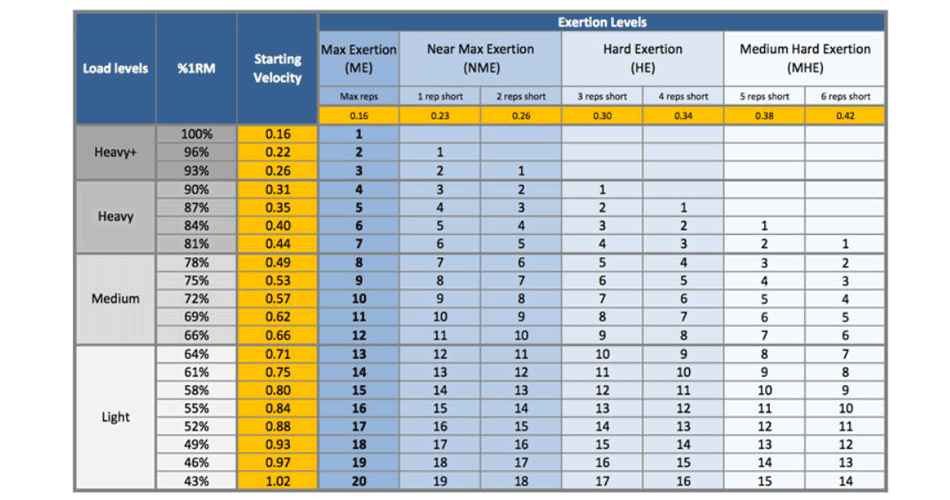
You can layer VBT or RPE on top. Use percent-based as a starting point, let feedback refine it in real time.
The Point
The percent-based approach has clear limitations. You don’t know everything. You can’t. But used smartly—with ranges, conservative prescription 1RMs, room for adjustment—it’s robust and practical.
For team sport athletes, strength training generalists, you don’t need hyper-precision. You need robustness over optimality. Good enough, adaptable, doesn’t collapse under fatigue and variation.
That’s what percent-based delivers when you stop trying to make it perfect.






Responses